 For any query/comment related to this ebook, please contact us at haidar.ali@rekhta.org
About The Author
Identity: Distinguished Researcher, Ghalib Scholar, Translator, and Editor
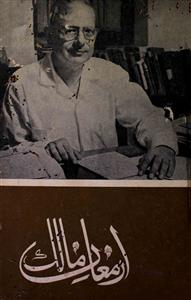
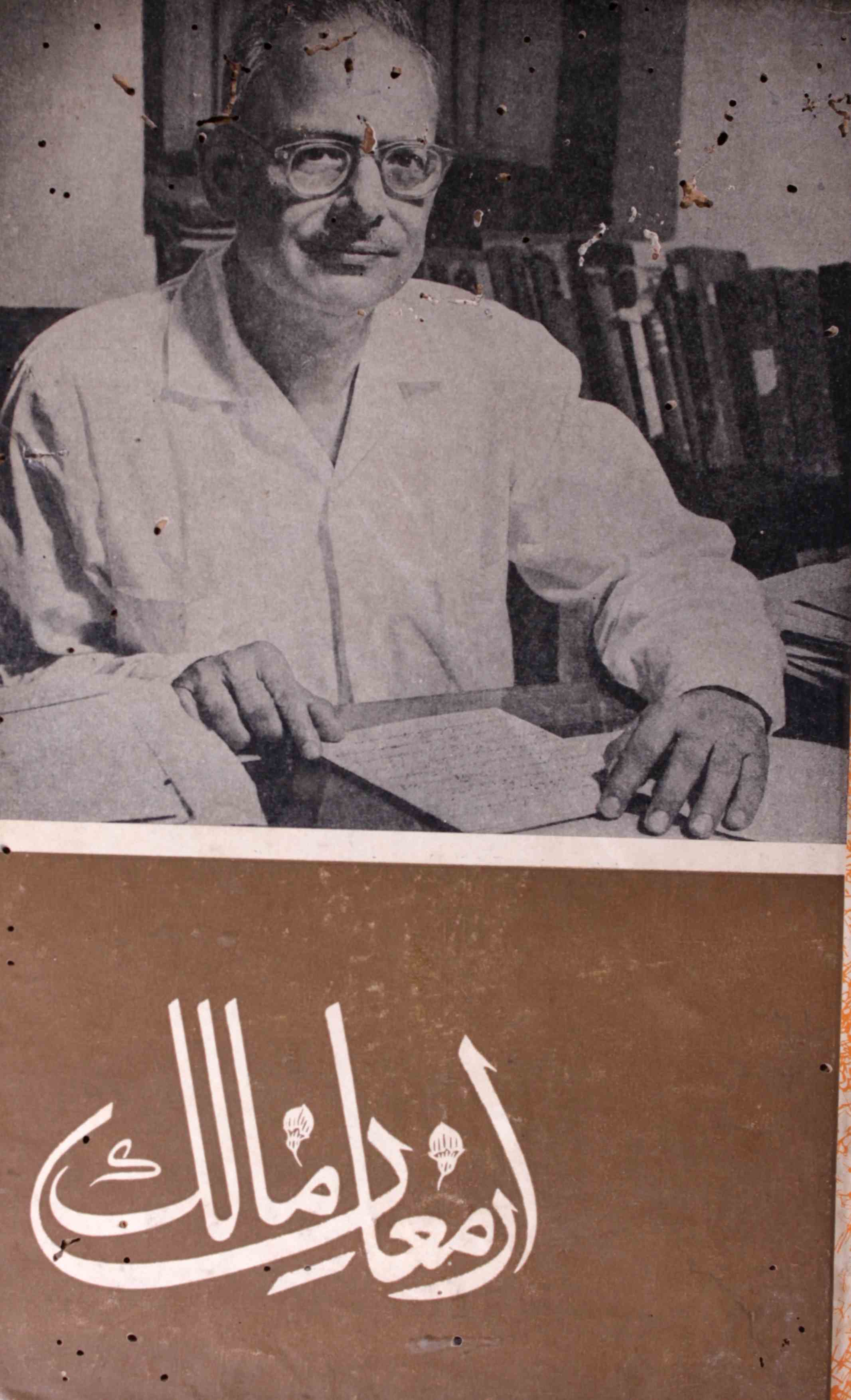
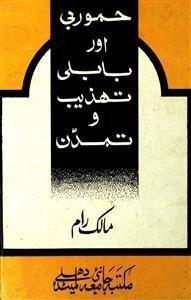
Malik Ram Baweja is recognized in the Urdu world as a distinguished researcher, editor, and especially a scholar of Ghalib. The seriousness, rigor, and integrity with which he worked on Ghalib’s life, poetry, and letters placed him among the foremost Ghalib scholars of the twentieth century. His contributions to research, editing, biographical writing, and literary history are also highly significant.
Malik Ram was born in December 1906 in Phalia, District Gujarat (now in Pakistan). Family traditions suggest that 22 December 1906 is the more accurate date, although official records mistakenly listed 8 March 1907. His father, Lala Nihal Chand, worked in the Supply Department and spent some years in China. After his father’s death, his mother Bhagwan Devi courageously took responsibility for the upbringing and education of her children.
His early education took place at the Phalia gurdwara, where he learned Gurmukhi and Gurbani. He later joined a vernacular high school. He completed high school in 1924 and intermediate in 1926, then moved to Lahore for higher education. He earned a B.A. from I.V. College and an M.A. in History from Government College Lahore in 1930, followed by an LL.B. in 1933. His literary talent was evident from student days, and he won essay competitions.
In his youth, he founded a literary society called Bazm-e-Adab. His article “Zauq and Ghalib” was published in the journal Nigar, establishing his literary reputation. He later joined the well-known journal Nairang-e-Khayal and contributed significantly to its “Iqbal Number.” He translated into Urdu and annotated English essays on Iqbal by Abdur Rahman Bijnori, which were appreciated by Allama Iqbal himself.
After 1936, he moved to Delhi for employment and joined the Government of India’s Commerce Department in 1939. He later entered the Indian Foreign Service and served in countries such as Egypt, Iraq, Turkey, and Belgium. He retired in 1965 and then devoted himself fully to scholarly and literary pursuits.
He meticulously edited the works of Maulana Abul Kalam Azad and founded a literary organization called Ilmi Majlis. He served as Pro-Vice Chancellor of Jamia Urdu, member of the Ghalib Academy, and president of Anjuman Taraqqi-e-Urdu. He was also a member of the court of Aligarh Muslim University.
His notable works include Zikr-e-Ghalib, Fasana-e-Ghalib, Talamiza-e-Ghalib, Khutoot-e-Ghalib, Diwan-e-Ghalib, Yadgar-e-Ghalib, Gul-e-Rana, Ghubar-e-Khatir, Khutbat-e-Azad, Tarjuman-ul-Quran, Karbala Katha, and Jigar Barelvi: Personality and Art. He critically organized and examined Ghalib’s life and poetry, making authoritative contributions to Ghalib studies.
Due to his research depth, balance, and wide reading, Malik Ram is ranked alongside major scholars like Qazi Abdul Wadood and Imtiaz Ali Arshi. His work remains a foundational source in Ghalib studies.
Death: Malik Ram passed away in 1993.
For any query/comment related to this ebook, please contact us at haidar.ali@rekhta.org