 For any query/comment related to this ebook, please contact us at haidar.ali@rekhta.org
About The Author
Identity: A great Bengali poet, writer, philosopher, short-story writer, novelist, educationist, and a Nobel Prize–winning global figure.
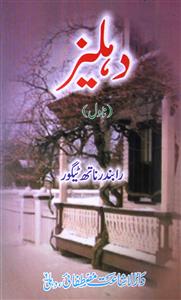
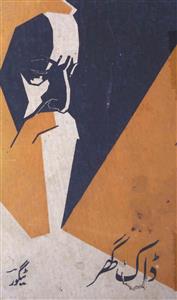
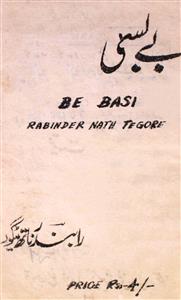
Rabindranath Tagore (whose original name was Rabindranath Thakur; Tagore is a distorted form of Thakur) is regarded as one of the greatest pillars of Bengali literature. He was a multi-dimensional creative genius who left a deep and lasting impact on world literature and thought through poetry, short stories, novels, drama, music, philosophy, education, and cultural reflection.
Rabindranath Tagore was born on 7 May 1861 in Calcutta. He received his early education there. His extraordinary intellect and creativity were evident early on, as his first book was published when he was only 17 years old. In 1878, he went to England to study law but returned after about a year and a half without completing the degree. Thereafter, he devoted himself entirely to self-study, writing, and intellectual development. During this period, he wrote short stories and firmly established poetry as his primary creative expression.
Tagore wrote most of his works in the Bengali language. In 1901, he founded Santiniketan at Bolpur in Bengal, a unique educational ashram based on a synthesis of Eastern and Western philosophies. In 1921, it developed into Visva-Bharati University. At Santiniketan, Tagore translated many of his Bengali works into English, which helped spread his fame across Europe and America.
Tagore also had a profound influence on Urdu literature. Urdu translations of his poems, short stories, novels, and plays introduced Urdu readers to his thought and art. Translators such as Niaz Fatehpuri, Firaq Gorakhpuri, Hamid Hasan Qadri, Abdul Aziz Khalid, M. Ziauddin, and later Suhail Ahmad Farooqi, M. Ali, and Faheem Anwar played an important role in establishing Tagore’s connection with Urdu literature.
Several major Urdu writers and poets—such as Premchand, Josh Malihabadi, Majnoon Gorakhpuri, Sajjad Zaheer, and Niaz Fatehpuri—show clear traces of Tagore’s influence. His poetry reflects Indian civilization, nature, soil, seasons, and human emotions with such universality that it appeals to readers across languages and cultures.
Tagore travelled extensively to Europe, Japan, China, Russia, and the United States, and delivered lectures at various international forums. In 1913, he was awarded the Nobel Prize for Literature for his celebrated work Gitanjali, becoming the first Asian Nobel laureate in literature. In 1915, the British government conferred upon him the title of “Sir,” which he later renounced in protest against the Jallianwala Bagh massacre—an enduring example of his moral courage.
In the later years of his life, Tagore travelled widely across the civilized world. In 1930, he delivered a series of significant lectures in London under the title The Religion of Man. Remarkably, he took up painting after the age of 68, and exhibitions of his artwork were held in New York and other cities. He composed nearly three thousand songs, wrote countless poems and short stories, and several plays. Many Indian universities, as well as Oxford University, awarded him honorary doctorates. Owing to his immense creative stature, he is often called “the Shakespeare of the Bengali language.”
Santiniketan remained the center of Tagore’s life. His wife, two of his children, and later his father (in 1905) passed away there. Financially, he received a monthly allowance from the Maharaja of Tripura. To sustain the institution, he sold family jewelry, a house in Puri, and relied on royalties from his books. This spirit of sacrifice and perseverance transformed Santiniketan into a world-renowned center of learning. After 1934, Tagore’s health gradually declined.
Death: He passed away on 7 August 1941 in Calcutta.
For any query/comment related to this ebook, please contact us at haidar.ali@rekhta.org