 For any query/comment related to this ebook, please contact us at haidar.ali@rekhta.org
About The Author
Identity: A popular novelist and short story writer, and a significant voice of social realism in Urdu literature.
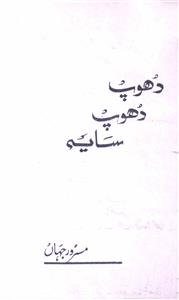
Begum Masroor Jahan (born Masroor Khayal) was born on 8 July 1938 in Lucknow into a literary family. Her grandfather, Sheikh Mehdi Husain Nasiri Lakhnavi, was a noted poet and teacher, whose students included Firaq Gorakhpuri and Dr. Ejaz Husain. Her father, Naseer Husain, was also a distinguished poet (pen name: Khayal) and a teacher at Islamia College, Lucknow.
At the age of 16, she was married to Syed Murtaza Ali Khan. Her life was marked by personal tragedies, including the loss of two brothers and a young son.
Her first short story, “Who Was She?”, was published in 1960 in the Urdu journal Qaumi Awaaz. Her first novel “Decision” appeared in 1962 in Pakistan. Initially writing under the name “Masroor Khayal,” she later became widely known as “Masroor Jahan.”
Her works were published in well-known journals like Hareem and Beesveen Sadi. Although she wrote many novels, critics believe her short stories reflect her finest creative expression.
Her writings cover a wide social spectrum—from the middle class to the elite—focusing especially on women’s issues, domestic oppression, social values, and the complexities of human relationships. Her style is sensitive, balanced, and realistic. Though socially critical, she did not align herself with any particular literary movement.
Her novel “Taabaan” (1970) brought her major recognition. Other popular works include “Jab Gile Mit Gaye” and “Kahan Ho Tum.”
Her novel “Nai Basti” (1982) deals with the problems of the urban poor and illegal settlements.
Her short story collection “Tere Mere Dukh” was appreciated for its deep portrayal of shared human suffering.
She received the Uttar Pradesh Urdu Akademi Awards in 2010 and 2015, and the Hindustan Times Women’s Award in 2017.
Death: She passed away on 22 September 2019 in Lucknow due to a brain stroke.
For any query/comment related to this ebook, please contact us at haidar.ali@rekhta.org