 For any query/comment related to this ebook, please contact us at haidar.ali@rekhta.org
About The Author
Identity: Renowned writer of adventure fiction, pioneer of the “Lost World” genre, and creator of the globally acclaimed novel 'King Solomon’s Mines'
Sir Henry Rider Haggard was a British author internationally famous for his adventure fiction and romantic tales. He is regarded as one of the founders of the “Lost World” literary genre. His writings are especially noted for their depictions of mysterious African landscapes and ancient civilizations.
Henry Rider Haggard was born on 22 June 1856 in Bradenham, Norfolk, England. He was the eighth of ten siblings. His father, a barrister, did not consider him especially intelligent; therefore, unlike his elder brothers, he was sent to Ipswich Grammar School instead of expensive private schools. After failing the army entrance examination, he was sent to South Africa.
Africa played a defining role in Haggard’s life. In 1875, he arrived in Natal, South Africa, as assistant to the secretary of the governor. He was present at the British annexation of the Transvaal and reportedly helped raise the Union Jack there. During his stay, he became deeply influenced by African civilizations, peoples, and legendary tales, all of which later shaped his fiction.
After returning to England, Haggard began practicing law, but his true interest lay in writing. He therefore decided to write adventure novels for young readers.
His literary fame began with the publication of the celebrated novel King Solomon’s Mines in 1885, which brought him international recognition. The novel’s protagonist, Allan Quatermain, became his most famous fictional character and appeared in eighteen of his novels. The popular film character Indiana Jones was partly inspired by Quatermain.
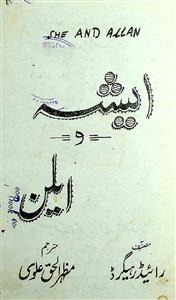
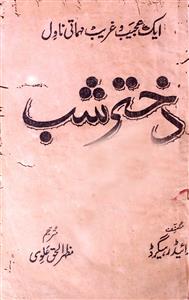
His novel She features the immortal queen “Ayesha” and has sold over 83 million copies worldwide. The famous psychologist Carl Jung regarded the character as a symbolic representation of a key psychological archetype.
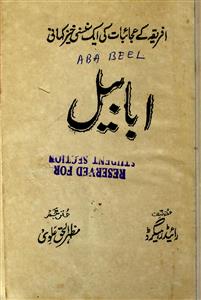
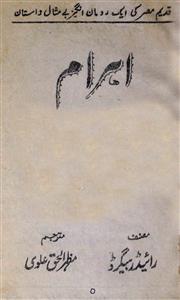
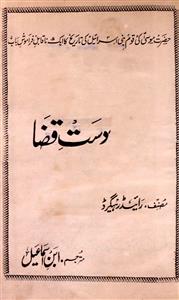
Many of Rider Haggard’s novels were translated into Urdu by Mazhar-ul-Haq Alvi, M. J. Alam, and other translators, through whom Urdu readers also became acquainted with his adventurous fictional world.
Rider Haggard was not only a novelist but also served on several commissions concerning agricultural reform and land use within the British Empire. In recognition of his services, he was knighted in 1912 and was appointed Knight Commander of the Order of the British Empire (KBE) in 1919.
Haggard’s work is often examined in the context of colonialism. While he has faced criticism for racial stereotypes, his novels were also notable for portraying certain African characters—such as Zulu warriors—as brave and heroic figures, which was unusual in British literature of his time.
Death: Rider Haggard passed away on 14 May 1925 in London.
For any query/comment related to this ebook, please contact us at haidar.ali@rekhta.org