 For any query/comment related to this ebook, please contact us at haidar.ali@rekhta.org
About The Editor
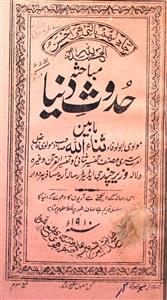
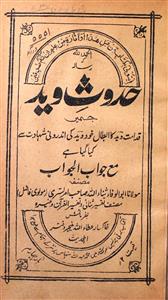
Identity: Hadith Scholar, Exegete, Historian, Journalist, Debater, Political Leader
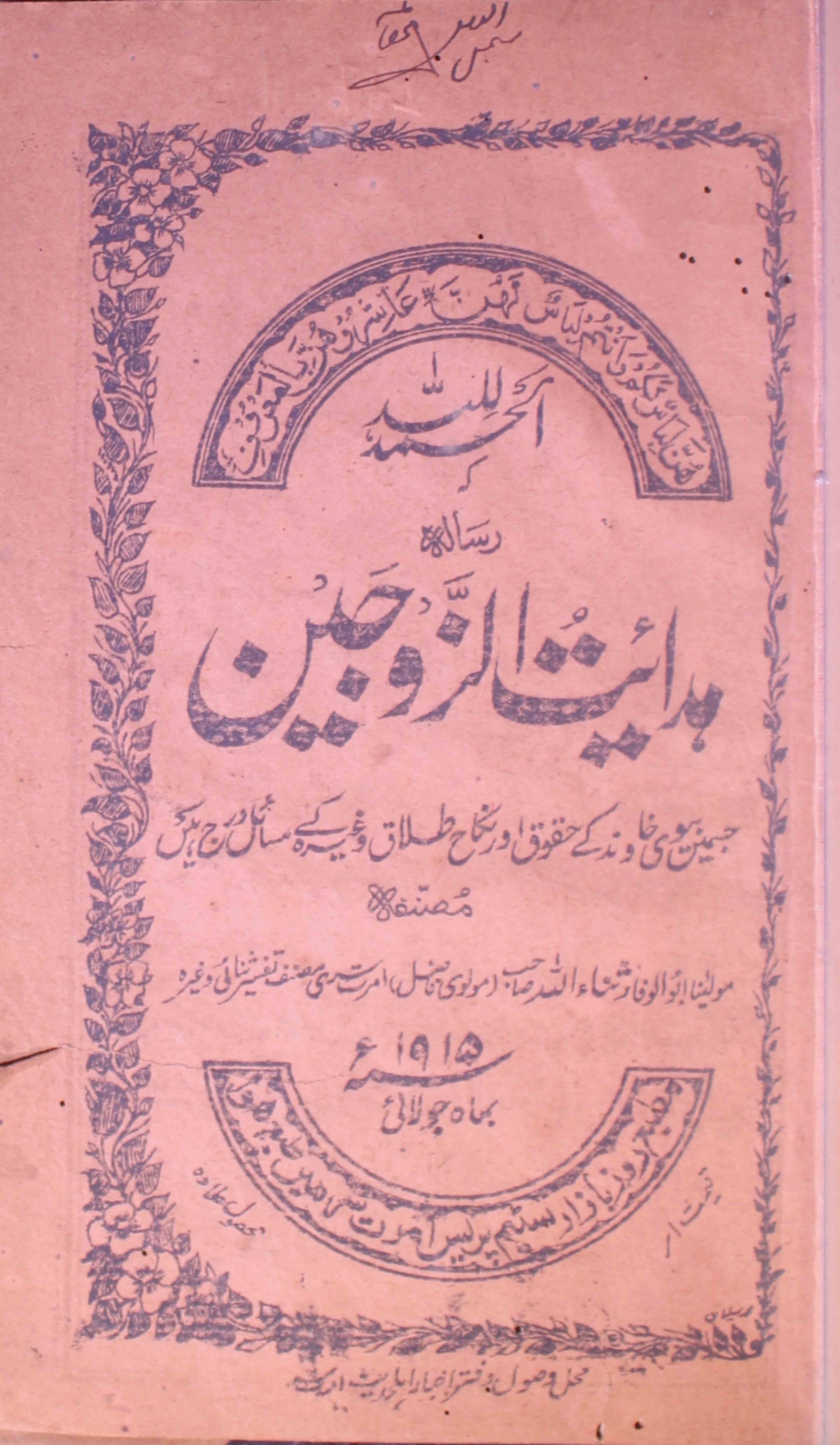
Maulana Abul Wafa Sanaullah Amritsari was one of the remarkable personalities of the Indian subcontinent who left lasting marks in the fields of religion, politics, journalism, and debate at the same time. He was a commentator of the Qur’an, a scholar of Hadith, a historian, a fearless journalist, and an active leader of the freedom movement. He was known among scholars and the public with titles like “Fateh Qadian,” “Sher-e-Punjab,” and “Sardar Ahl-e-Hadith.”
He was born on 12 June 1868 in Amritsar in a Kashmiri family. His father passed away when he was only seven years old, and his mother also died when he was fourteen. Due to poverty, he initially learned tailoring (darning work), but soon his passion for knowledge brought him to a madrasa. He studied under renowned scholars like Maulana Ahmadullah Amritsari, Hafiz Abdul Mannan Wazirabadi, and Mian Nazir Hussain Dehlavi. Later, he studied rational and transmitted sciences at Darul Uloom Deoband under Maulana Mahmood Hasan and also obtained a Hadith sanad from Kanpur.
One of the major aspects of his scholarly work is his Qur’anic commentary. His Urdu tafsir “Tafsir-e-Sanai” (8 volumes) is known for its simplicity and strong responses to the objections of critics of Islam. It took him 36 years to complete. Another important work is in Arabic, “Tafsir al-Qur’an bi Kalam al-Rahman,” in which the Qur’an is explained through the Qur’an itself.
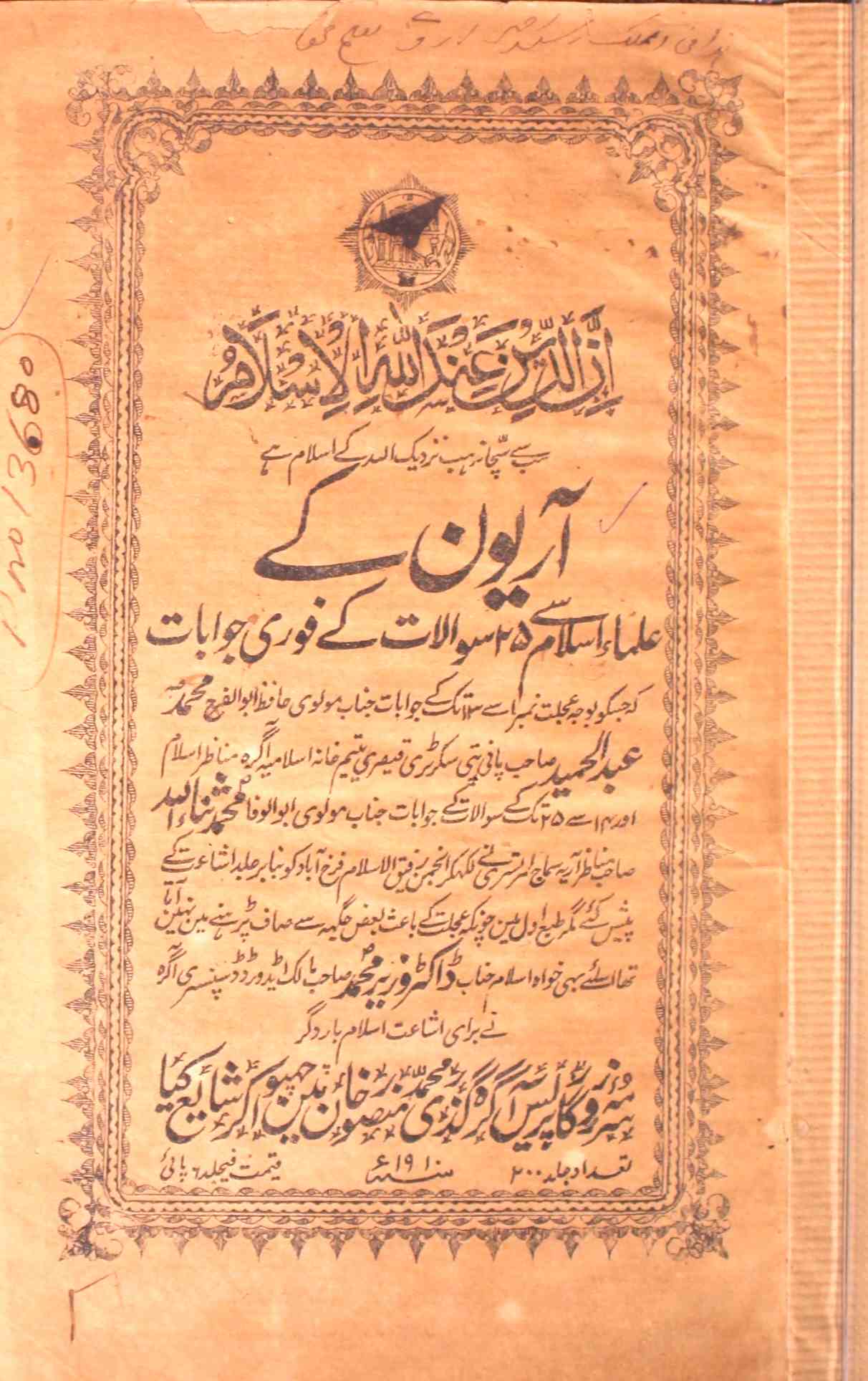
His era was full of ideological challenges. On one side, Arya Samaj and Christian missionaries were attacking Islam, and on the other, the movement of Mirza Ghulam Ahmad Qadiani was rising. Maulana defended Islam on all these fronts as a powerful debater. He wrote “Haq Prakash” in response to Arya Samaj’s “Satyarth Prakash” and “Muqaddas Rasool” against the offensive book “Rangeela Rasool.” His long debates with Mirza Ghulam Ahmad Qadiani became part of history, earning him the title “Fateh Qadian.”
In journalism, he launched the weekly “Ahl-e-Hadith” in 1903, which continued publication for 44 years. In politics, he was initially associated with Congress and later joined the Muslim League. He was among the founders of Jamiat Ulama-e-Hind and served for a long time as the chief organizer of the All India Ahl-e-Hadith Conference. He also led important political meetings after the Jallianwala Bagh incident.
During the partition of India in 1947, he faced severe hardships. While migrating from Amritsar, his only son, Maulvi Ataullah, was martyred, and his valuable library was burned. He migrated to Pakistan and settled in Sargodha.
Death: He passed away on 15 March 1948 in Sargodha.
For any query/comment related to this ebook, please contact us at haidar.ali@rekhta.org


Most Popular Magazines
Browse this curated collection of most popular magazines and discover the next best read. You can find out popular magazines online on this page, selected by Rekhta for Urdu magazine readers. This page features most popular Urdu magazines.
See More