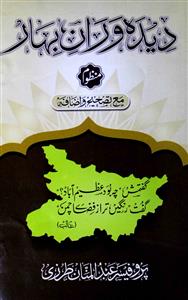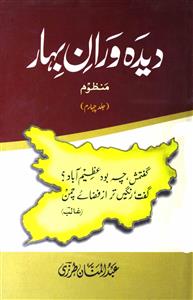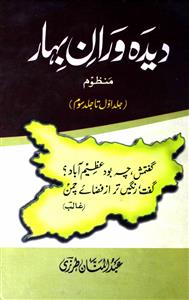
 For any query/comment related to this ebook, please contact us at haidar.ali@rekhta.org
About The Author
Identity: Distinguished poet, renowned scholar of Persian and Urdu, recipient of the President of India’s literary honor, and pioneer of versified academic essay writing
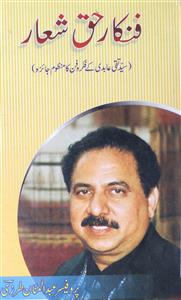
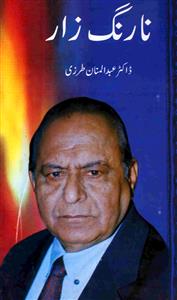
Abdul Mannan Tarzi was born on 3 July 1940 in Jalwara, Darbhanga district, Bihar. He received his early religious education from his father, Qari Muhammad Dawood Talib, under whom he memorized the Qur’an, studied introductory Persian texts, and learned the art of calligraphy.
His educational journey is marked by extraordinary perseverance. After matriculation, financial responsibilities compelled him to enter professional life, yet he did not abandon his pursuit of knowledge. Alongside government service, he privately earned degrees in Intermediate, B.A. (Honours in Urdu), M.A. in Urdu, M.A. in Persian, and LL.B. He later completed his PhD with a dissertation titled “Nawab Syed Saadat Ali Khan Paighambarpuri: Life and Contributions.”
Professor Tarzi’s professional life is a remarkable example of diligence, struggle, and self-making. After working in various occupations, he joined Darbhanga Medical College as a clerk in 1961. In 1972, he was appointed Lecturer at Kunwar Singh College, Laheriasarai. Later, he became associated with the Department of Urdu at Lalit Narayan Mithila University and retired as a University Professor.
In literary circles, Professor Tarzi is regarded as one of the most prolific and gifted poets of his era. He has composed more than sixty thousand verses, distinguished by intellectual depth, linguistic mastery, and artistic originality.
His most notable literary contribution is the introduction of versified academic essay writing (Manzoom Maqala Nigari) into Urdu literature, through which he pioneered the presentation of scholarly and critical discourse in poetic form. His versified papers on figures such as Wali Dakhni, Premchand, Maulana Rumi, and Imam Ghazali were presented at national and international academic seminars and received exceptional acclaim.
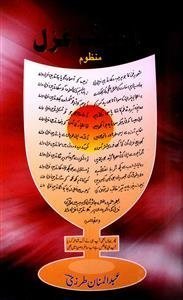
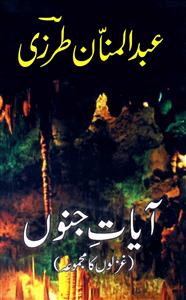
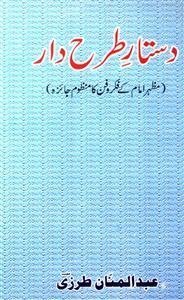
His major works include Aayat-e-Junoon, Aahang-e-Ghazal, and Manzoom Maqale. In addition, he compiled a versified biographical anthology of hundreds of non-Muslim poets who wrote na‘at, thereby making a unique contribution to Urdu devotional literature.
In recognition of his profound command over Persian language and literature, he was awarded the prestigious Presidential Honor for Persian Language and Literature by the President of India in 2012
For any query/comment related to this ebook, please contact us at haidar.ali@rekhta.org