Mirza Yagaana
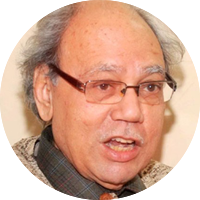
Every question raised by Yagana’s poetry finds its answer in his personality. Consequently, no study of his poetry is complete without an understanding of the man himself. When a poet’s entire existence becomes his creative experience—and when this experience, in its totality, has the power to captivate the reader—it poses a unique challenge for literary criticism. It becomes difficult to determine where the discussion of his poetry should begin, and at what point one must grapple with the complexities of his personality.
Yagana made no attempt to conceal himself, either consciously or unconsciously. Whether we evaluate his poetry against the backdrop of the broader Urdu poetic tradition or within the context of his own era, his personality inevitably stands before us. Much like his poetry, this personality is neither vague, overly complex, nor deliberately mystifying. Instead, it is a robust, vibrant, and sharply defined persona—nurtured by a kind of mental and emotional resilience, as hard and unyielding as stone. While the intense heat of his inner self may melt this stone, it never allows it to shatter. We can neither break this personality into fragments nor mold it arbitrarily to suit our own literary tastes and intellectual needs. Even in moments of exhaustion and despair, this personality speaks to us on a deeply individual level, compelling us to understand and analyze it strictly on its own terms.
On both a personal and creative level, Mirza Yagana stirred up considerable controversy. Therefore, it is no easy task to understand him while remaining entirely free of our own biases and preferences. However, on several occasions, Yagana himself made statements clarifying that his philosophical reality is not some complex knot, but rather a simple, straightforward life, or that his poetry is an exact reflection of his life. At the same time, he also asserted that poetry (in its truest sense) is essentially another name for imagination, and that poetry is purely a matter of aesthetic taste and intuition. He believed that representation and imagination are the fundamental elements of poetry (as stated in his book Chiragh-e-Sukhan). Yet, these assertions do not contradict his core stance, nor do they negate the deep connection between his personality and his poetry.
On the surface, the echoes of Shibli’s concept of poetry can be clearly heard in these definitions. Looking at them, one might assume that Yagana’s special affinity for Mir was not without reason. This connection is further supported by certain personal attitudes of Yagana, quite apart from his theoretical views on poetry. Consequently, there is a common misconception that Yagana belongs to the same tribe of poets as Mir, and that he views Mir’s brand of inwardness and introspection as the ultimate poetic ideal. However, this impression stems from accepting Yagana’s statements at face value, and in the final analysis, it proves to be incorrect. No matter how devoted an admirer of Mir he may have been, the dominant tendencies of Yagana’s poetry and personality made him an entirely different kind of being. The most striking proof of this is that Yagana’s poetry is completely devoid of that precious element of mystery which is the defining hallmark of Mir. It is this very element of mystery that elevates Mir’s poetry beyond the boundaries of the tangible, taking it to a realm where the supremacy of emotion and sensory experience over pure intellect becomes unmistakably clear.
In Mir's case, the creative experience leaves both the poet’s own self and the physical universe far behind, becoming an index of a newly discovered truth and a newly ordered universe—a place where the universal takes on the hue of the specific, and the ordinary assumes the color of greatness. Conversely, in his book Ayat-e-Wijdani, Yagana writes: The greatest principle of criticism is to see whether a verse aligns with the demands of the present moment—that is, whether it is true to life. He further states: A true poet uses his poetic mastery over reality to inform and delight his audience, whereas a non-poet merely bewilders people by entangling them in impossibilities. These statements distance Yagana from Mir. They are simply an extension of Yagana’s fundamental stance: that the trajectory of his life and his poetry share the exact same methods and objectives. Their essence is one. Their structural elements and contours are identical, and both are equally subjected to the material pressures and hardships that Yagana endured throughout his life.
The tragedy of both Yagana’s life and his poetry is that he never allowed these spheres of truth to become self-sufficient. Instead, he constantly sought to complete one through the other. He remained preoccupied with treating both truths on the exact same level—or rather, attempting to fuse them into one—keeping them perpetually indebted to each other. Had his life been like the average, mediocre lives of others—devoid of major turmoil, comfortable, and secure—Yagana’s destiny would have been entirely different. In that case, he too would have sought refuge under the canopy of a safe, comfortable existence like his contemporaries, and quietly slipped into the annals of our poetic history. He would not have found himself at odds with the world, nor with the popular and prevailing critical attitudes of his time.
Whatever the mental, emotional, and practical experiences of poets like Fani, Asghar, Hasrat, Seemab, Aziz, and Jigar might have been, they ultimately fared well in both literature and society. Yagana’s life, however, despite its outward simplicity, represented a new code of living, just as his poetry represented a new code of thinking—one that was loud, rebellious, and ready to clash with all the established norms of his era. Yagana’s way of living and thinking did not stand out from the styles of his time merely on the strength of its individuality. Granted, individuality is a significant achievement, but attaining it can sometimes be quite easy. Merely insisting on a specific posture or endlessly repeating a single experience can easily earn someone the badge of individuality. Yagana’s individuality, however, was not just a quirky idiom of life and thought, detached from the collective, that one could master with a little practice. Rather, it was the hard-earned reward of continuous struggle, conflict, and tribulation. To earn this reward, Yagana’s life and poetry had to endure a long, arduous journey through the wilderness, paying a remarkably high price. Viewed from this perspective, Yagana does not appear empty-handed despite his material poverty. He possessed the inner wealth to pay the price for every one of his experiences out of his own pocket.
In Yagana, the processes of self-effacement and self-reliance run parallel to one another. One way to escape this inner conflict would have been for Yagana to genuinely become a Sufi—exactly what Professor Mumtaz Hussain, through immense effort and flawed interpretations of his verses, has attempted to turn him into. Mumtaz Hussain did not hesitate for a single moment before passing the verdict: Yagana, like Mir, is a poet of Wahdat-ul-Wujood (Unity of Being). He does not believe in searching for God outside of himself, nor does he believe that the part can be separated from the whole. However, Yagana’s concept of Wahdat-ul-Wujood centered on an impersonal God. He conceived of God as being beyond the grasp of human emotions. He could not perceive God—whether as a divine manifestation or as the unity of existence—within the phenomena of nature or within mankind. Consequently, his concept of Wahdat-ul-Wujood could never translate into love and descend into his heart.
Later in the same essay (titled Yagana's Art, published in Adab, Karachi, Issue 2), Mumtaz Hussain goes on to explain Wahdat-ul-Wujood, stating:
An objection is commonly raised against the Sufis of Wahdat-ul-Wujood: if everything is Him, and nothing exists outside of God, then there can be no evil and no corruption. This implies an absolute freedom in life. There is no doubt that, under the guise of the philosophy of Wahdat-ul-Wujood, certain poets exercised a kind of liberty in matters that Islamic jurisprudence (Shariah) strictly criticizes—for instance, the prohibitions against Sama (Sufi music) and intoxication. However, this liberty did not cause any flaw in the transcendent purity of their character. Mir was a poet of Wahdat-ul-Wujood.
Well, that settles it. Mir is a poet of Wahdat-ul-Wujood, and Yagana is a poet of Wahdat-ul-Wujood. On this front, both have been assigned the exact same fate. Yet, Mumtaz Hussain is still not satisfied. He pivots back to Yagana with another decree: The 'remembrance of God' that is free from base greed, and the prayer that desires no reward—Yagana believed in exactly this kind of remembrance and prayer. The transcendent and abstract dimension this brings to his life is precisely what explains his self-reproaching conscience. Yagana was a poet, and generally, a poet’s life is one devoted to worldly pleasures. However, for the sake of perfecting his character, Yagana had forbidden many of these pleasures for himself, and so on and so forth.
The purpose of drawing attention to these excerpts is to illustrate how easily a man like Yagana—who never surrendered to the world—can be so casually defeated in the realm of literary criticism. It shows the lengths to which a critic’s self-indulgence can go once they get hold of the thread of their favorite topic or theory. Whether positive or negative, our literary criticism regarding Yagana has traditionally suffered from a tragic intellectual laziness. While Mumtaz Hussain has committed an equal injustice against both Wahdat-ul-Wujood and Yagana, even those critics who stepped up to defend Yagana against such indifference and mistreatment have generally failed to view him through the specific lens that his poetry demands. Identifying this proper perspective was never difficult, because the demands of both Yagana’s poetry and his personality are abundantly clear.
As mentioned earlier, despite all its uproar, Yagana’s life was not complicated. Its turmoils were formidable, and its conflicts were intense, yet they were always straightforward. His life had a logic for every aspect and a rationale for every principle. Whether we accept or reject this logic, we cannot simply dismiss it as incomprehensible or vague. Similarly, driven by his rebellious and fierce temperament, Yagana’s intellectual thought emerged as firm convictions. These convictions expressed themselves bluntly, leaving no room for doubt or speculation. Yagana had a habit of thinking out loud. This loud resonance is an inherent part of his poetry's internal structure. While it may limit his thought, it simultaneously illuminates it. The intellectual vision that emerges from this process is free from both mental fog and emotional delusion. Every experience stands out clearly against this backdrop.
Just as he was with himself, Yagana could not tolerate any artificiality or deception regarding his surroundings. He even rejected the kind of artistic illusion that turns a literary work into a logical fallacy, exaggerates a trivial matter into a miracle, or justifies itself through the spontaneity of creative vision. This is why I previously stated that despite his affinity with Mir Taqi Mir, Yagana is vastly different and far removed from him. True, there are certain similarities in their value systems: both were victims of a society that crushed individuality. Both wanted to live life on their own terms and wished to navigate their entire life's journey guided by their inner light. For both, asserting their ego was a moral necessity. Both maintained an adversarial relationship with their respective eras. Both were disgusted by the clamor of their detractors and sought a sanctuary where the banner of their own voice would never be lowered. However, their participation in this struggle followed entirely different paths.
For Mir, the entire struggle was internal, whereas Yagana was actively and practically combative. No matter how deeply Mir felt something, he never abandoned discipline and decorum in his expression. Yagana, on the other hand, never had the luxury of such restraint. When Mir feels helpless, he either falls silent or speaks in the language of sorrow—as he once wrote, he never uttered a word of complaint. In contrast, when Yagana feels helpless, he lashes out in frustration and begins to speak recklessly. Mir and his society possessed a greater capacity to tolerate their mutual differences. At the point where their paths diverged, both Mir and his society could still find ways to coexist and survive independently. Yagana was less fortunate in this regard; his era was gradually hurtling toward a storm of chaos, and he himself rarely found the opportunity to steady himself or breathe a sigh of relief.
The truth is that the circumstances of his time entangled Yagana so deeply that he could not focus on healing his wounds or objectively analyzing his own turmoil. The occasional shriek in his voice and the sense of imbalance in his reactions arose precisely because he largely failed to evaluate his experiences, define their meaning, and maintain the detached, unemotional distance from his own self that is essential for great poetry.
The evolutionary chain we observe from his early pen name Yaas to his later identity as Yagana remains unbroken. Therefore, the assertion made by Majnun Gorakhpuri and certain other critics—that Mirza Wajid Husain had to completely sever ties with Yaas to become Yagana—is incorrect. Human personalities are not like calendars, where you can simply tear off a page to subtract the past from the present and the future. The era that breathes within a person has the power to keep the past alive in the present. Even the poetry of Yagana’s final years, written while he was suffering from severe nervous breakdowns, reflects the face of Yaas. Time and again, we find examples where, instead of emotional excess and intellectual extremism, his verses display the same composure, gentleness, and musicality that enriched his early poetry:
Le chali wahshat-e-dil kheench ke sehra ki taraf
Thandi thandi jo hawa aayi bayabanon se
The madness of my heart dragged me toward the desert, / Whenever a cool breeze blew in from the wilderness.
Ab apne khatm-e-safar mein kuch aisi der nahi
Jo der hai toh faqat thak ke baith jaane ki
There is not much time left now until my journey ends, / The only delay is in finally sitting down out of exhaustion.
Daleel-e-raah dil-e-shab charagh-e-be-tanha
Buland-o-past mein guzri hai justuju karte
My heart was my only guide and solitary lamp in the dark night, / I spent my life searching through the highs and lows.
Apna ghar apni zameen apna falak begana
Aashna koi bajuz saya-e-deewar nahi
My own home, my own earth, and my own sky feel alien to me, / I have no friend left except the shadow of the wall.
Barhte barhte apni hadd se barh chala dast-e-hawas
Ghat-te ghat-te ek din dast-e-dua ho jayega
The hand of greed has stretched far beyond its limits, / Shrinking gradually, one day it will become the hand of prayer.
Kaash apni rooh khana-e-tan se nikal sake
Zindan-e-aab-o-gil koi rahat ka ghar nahi
If only my soul could escape this prison of the body, / This cage of water and clay is no place of comfort.
Gunahgaar hoon phir bhi woh dil diya tune
Teri janab mein pahunchun toh tharthari na lage
I am a sinner, yet You gave me a heart so bold, / That when I stand before You, I do not tremble.
Khana-e-dil mein bhari hain jaane kya kya daulatein
Qufl-e-khamoshi mere ghar ka nigehbaan kyun na ho
Who knows what countless treasures are hidden in the house of my heart, / Why shouldn't the padlock of silence be the guardian of my home?
The overarching mood of these verses is steeped in a profound and dignified sense of sorrow and solitude. Yagana has no shortage of such poetry, yet his fierce temperament was exaggerated and discussed far more than necessary. Consequently, his literary identity became unfairly restricted to a very specific style of poetry. Unlike his contemporaries, Yagana was not confined to a single mode of expression; he was, in fact, a poet of multiple styles. He could be spontaneous and simple, yet also cunning and tactical; he could be deeply profound, yet also delightfully irreverent:
Kis maze se hain biwiyon wale
Aish karte hain roz-marra udhaar
How wonderfully those with wives live, / Enjoying daily luxuries on borrowed money.
Aa gayi chheenk ruk gaya peshab
Phir bhi insaan hai faail-e-mukhtar
A sudden sneeze stops the flow of urine, / Yet man still claims to have absolute free will.
Verses like these—which evoke the style of Zafar Iqbal and contain early traces of the anti-ghazal—are part of the same overarching intellectual landscape. Much like Yagana’s own personality, this landscape is free from rigid categorizations of high and low, or humor and seriousness. It reflects a mind accustomed to treating life, with all its inherent contradictions, as a single, unified whole, accepting it in all its diverse shades. On one hand, this demonstrates Yagana’s immense self-confidence; on the other, it reveals his ability to simultaneously think, feel, and explore his experiences across multiple levels. What anchors his diverse sensibilities to a single focal point is his deeply personal perspective. This strong sense of self saved Yagana from total fragmentation and protected his poetry from sensory chaos. Despite the apparent scatteredness, an underlying sense of order is always preserved, and Yagana proves himself fully capable of expressing his identity through various distinct modes at once. Consider these verses:
Manam ke aaina-e-haq-numa baraye khudam
Manam ke mushtari-e-jins-e-be-bahaye khudam
Manam ke charagar-o-dard-aashnaye khudam
Manam ke dard-e-khuda-dadam-o-dawaye khudam
Manam ke sar nami aaram ba-sajda-e-nahaq
Manam ke dar rah-e-haq mahv-e-naqsh-e-paye khudam
Manam ke muntazir-e-inqilab mi basham
Manam ke silsila-junban-e-gham baraye khudam
Manam ke manzil-e-maqsud zer-e-pa daram
Shikasta payam-o-taham ba-muddaye khudam
Qadam ze-gham-kada-e-khud che mi naham beroon
Gada-e-khak-nishinam-o-man khabar na shudam
Hazar fitna bapa gasht-o-man khabar na shudam
Hazar koh shud az ja-o-man bajaye khudam
I am the mirror of truth for myself; I am the buyer of my own priceless worth. / I am my own healer and my own pain; I am my own God-given suffering and my own cure. / I do not bow in false prostration; I am lost in my own footsteps on the path of truth. / I am waiting for a revolution; I am the one who stirs the chain of my own sorrows. / My ultimate destination is under my feet; though my feet are broken, I still reach my goal. / Why should I step out of my house of sorrow? I am a beggar in the dust, oblivious to the world. / A thousand calamities arose, and I remained unaware; a thousand mountains moved, yet I stood firm in my place.
These verses serve as the testament of an individual who is at war with the world yet entirely self-contained. His existence is a universe unto itself—a unified whole encompassing a hundred styles, a hundred colors, and a thousand multiplicities that simply cannot be fragmented. We can read this as the chronicle of a man who, despite facing constant defeats, continues to chant his own truth. He remains autonomous even in his helplessness, and free even within his confines. Here, the reflections of both the spectacle and the spectator merge into a single mirror. Yagana observes himself with a sorrowful awareness, successfully carving out a path of detachment even amidst his attachments. This approach allows his intellectual thought to express both its outward manifestation and its inner essence. The most striking feature of these verses is their confessional tone. Infused with a majestic grandeur, this tone paints the portrait of a man who, to quote Rousseau, was born free but finds himself in chains everywhere.
These confessions are both an expression of his destiny and an exploration of the energy and potential hidden within it. They articulate a spiritual experience that connects him to the tremors of his own turmoil, both in his physical existence and his surroundings. Here, life itself has transformed into poetry. Through a subterranean musical current, it reveals that the pursuit of wisdom and awareness can be deeply creative and poetic, provided it is nurtured on a foundation of genuine emotion and sensory experience. In this state, the duality between knowledge and meditation dissolves, sketching out a vast experience that cannot be strictly categorized as either purely physical or purely metaphysical. Without relying on any divine intervention or superhuman ideals, Yagana’s sense of self evolves into a pure, realistic, and time-tested concept. This concept closely mirrors the intellectual movements that flourished long after Yagana’s era had passed.
Against the backdrop of his times, Yagana emerges entirely as an outsider. He stands as an individual who, trapped in the rigidity of a narrow and highly regulated society, does not merely express his helplessness. Instead, he highlights the fundamental contradiction that alienates him from his environment and keeps him perpetually restless. Within the context of that society, this very contradiction takes on the significance of a moral value.
Many chapters of Yagana’s life story reveal a side of his personality that, despite its balance and absolute sincerity, could never harmonize with his times. Ultimately, this disconnect turned into a social issue. Clearly, this issue was a product of his environment rather than of Yagana himself. Much like Yagana’s personality, the dimensions of this conflict are quite clear. As the saying goes, anyone accustomed to independent thinking harbors certain dangerous attitudes that can cause constant friction between them and their surroundings. For many, philosophy, wisdom, morality, religion, and a calculated sense of respectability are merely excuses to avoid this friction. In other words, they are tools to suppress a truth that is inherently rebellious and fierce—a truth that demands a kind of intellectual militancy to be fully expressed. Protecting such a truth is not only difficult but also deeply self-destructive.
It is not as if Yagana was unaware of the consequences of this attitude. For him, every phase of his own ruin and public disgrace unfolded exactly as he had expected. He never backed down because he simply lacked the ability to compromise his true self for the sake of convenience, expediency, or fear. Furthermore, in his clash with society, Yagana was fully conscious of the dignity of his defeat. This is why a readiness for destruction was always ingrained in his temperament. There was no question of Yagana ever accepting defeat. Gradually, finding victory in his defeats and moral triumph in his losses made him stubborn and headstrong. This very stubbornness was the source of his sadistic streak.
A powerful sense of fate and determinism was the ultimate enemy of Yagana as an individual, yet he never once expressed any resentment toward it. In fact, he cherished this feeling and used it to discover his own identity. He mocked every attitude that found acceptance in his society. All of Yagana’s literary battles—whether against Ghalib, Iqbal, Fani, Asghar, and Jigar, or against the Progressive movement and free verse—revolved around this single point. Moreover, Yagana had an obsessive, almost manic desire to have the final word on every matter. He would easily draw his own arbitrary conclusions to justify his actions. For instance, Yagana had convinced himself of the following: My recent article titled Adab-e-Khabees (Wicked Literature) has permanently settled the debate on blank verse. No rational discussion can be held on it anymore. Pure stubbornness, of course, is a different matter. (Letter to Dwarka Prasad Shola, October 23, 1954).
This statement reflects both his naivety and his obsession. Although Ali Sardar Jafri had echoed Yagana’s sentiments regarding blank verse, Yagana’s own reasons were less intellectual and more psychological. They were driven by the same temperamental impulse that made him oppose every popular and established trend.
It must be acknowledged, however, that the aggression in Yagana’s tone should not only be attributed to his fierce temperament. It must also be seen as a reflection of his dissatisfaction with outdated poetic conventions and his desire to forge a new poetics in their place. It is not that Yagana completely severed ties with traditional modes of expression. Rather than relying on dynamic, newly invented metaphors, Yagana showed a keen interest in the dormant, ready-made structures of language, such as idioms and proverbs. On one hand, this highlights his deep understanding of tradition and his linguistic habits; on the other, it suggests that he wanted to address his contemporaries in the familiar language of their time. The true power of his taunts, sarcasm, satire, and ridicule is most evident in the verses where he targets the popular poets of his era. The meanings in these verses are incredibly blunt. They do not reveal any profound creative mystery or rigorous artistic discipline, except for Yagana’s conscious effort to avoid redundancy and his intense focus on conveying his point directly.
Perhaps this is why Yagana’s rubaiyat (quatrains) are far more effective and brilliant than his standard couplets. The specific structure of the rubai makes it easier to encapsulate prosaic ideas and deliver them in a highly measured and precise manner. However, it must be remembered that within these familiar forms, Yagana discovered the poetics that he considered the foundation of Yagana's Art—a style that many viewed as a complete rejection of the traditional aesthetics of the ghazal. Drawing upon his deep understanding of tradition, Yagana carved out his own distinct path and sought to lead the ghazal down that very road.
On this journey, the shadows of classical masters like Mir and Aatish accompany him only for a fleeting moment. Yagana emerges with a completely new attitude. Instead of adopting the common trends of his contemporaries—their ornamentation, artificiality, effeminacy, cynicism, delicate imagination, and forced complexity—he speaks in a loud, masculine tone. Rather than relying on refinement and softness, Yagana’s poetics uses roughness and rigor to lay the foundation for a new tradition, one that stands in stark contrast to the conventional ghazal. At this point, he stands completely apart from his contemporaries. Just as he was isolated in his era, he remains entirely alone in the turbulent arena of his creative experience—condemned by the world, yet entirely at peace with himself and utterly indifferent to his ultimate fate.
Additional information available
Click on the INTERESTING button to view additional information associated with this sher.
About this sher
rare Unpublished content
This ghazal contains ashaar not published in the public domain. These are marked by a red line on the left.