 For any query/comment related to this ebook, please contact us at haidar.ali@rekhta.org
About The Author
Identity: Eminent linguist, lexicographer, researcher, and journalist
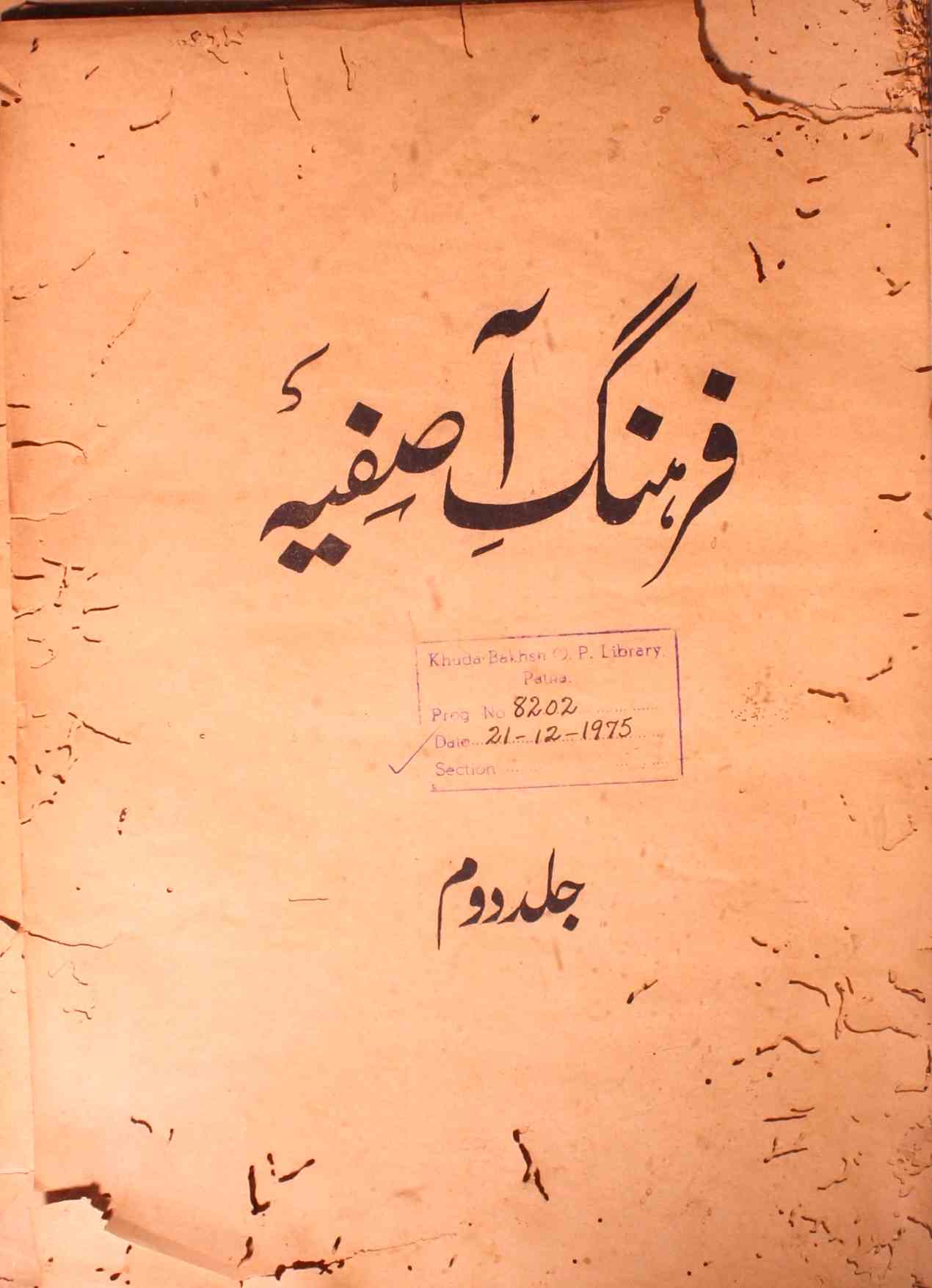
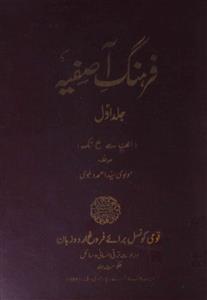
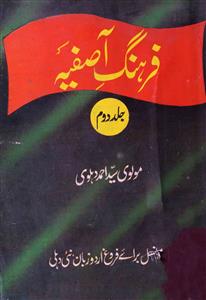
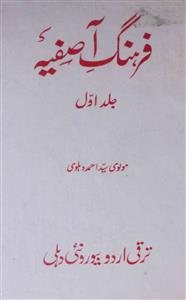
Syed Ahmad Dehlvi is counted among the distinguished scholars of Urdu who made significant contributions to language, literature, lexicography, and research. He is especially renowned for his monumental work Farhang-e-Asifiya, which secured him a prominent and authoritative place in the history of Urdu lexicography. His intellectual insight, command over language, and scholarly approach established him as a leading linguist of his time.
Syed Ahmad Dehlvi was born on 8 January 1846 in Delhi. He belonged to a scholarly and religious family. His father, Hafiz Abdul Rahman Mongeri, was a learned scholar and spiritually connected to the lineage of Hazrat Abdul Qadir Jilani. He received his early education at home in an intellectually rich environment, which nurtured his deep interest in language and literature.
After completing his education, he began his career in teaching and scholarly pursuits. He taught at Madrasa Shahi located in Arab Sarai, Delhi, where he instructed students in Urdu and Persian. Later, he was appointed as a teacher of Urdu and Persian at a Municipal Board High School in Himachal Pradesh. Owing to his academic excellence, he also served as a fellow and examiner at Punjab University. Additionally, he worked as the Deputy Manager at the Government Book Depot in Lahore, where he gained practical exposure to books and scholarly materials.
His contributions to linguistics were highly significant. Between 1873 and 1879, he collaborated with the renowned orientalist S.W. Fallon on linguistic projects, reflecting his scholarly competence and international recognition. He undertook diverse efforts for the promotion and development of the Urdu language.
He also played an important role in journalism. In 1884, he launched a unique women-oriented fortnightly newspaper titled 'Akhbar Al-Nisa, published from Delhi. This initiative reflects his commitment to social reform and women’s education.
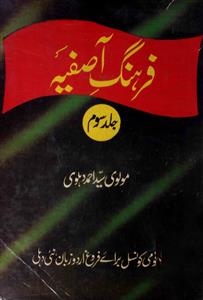
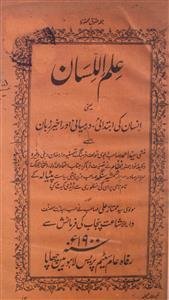
His literary contributions are vast. His most notable work, Farhang-e-Asifiya, is considered a landmark in Urdu lexicography. In Rusoom-e-Delhi, he documented the cultural and social life of Delhi. His other works include Hadi-un-Nisa, Lughat-un-Nisa, Ilm-ul-Lisan (a study of the origin, evolution, and development of language), Muhakama Markaz-e-Urdu, and Munazara Taqdeer-o-Tadbeer (Kanz-ul-Fawaid). His writings are marked by scholarly depth, clarity, and simplicity.
In recognition of his services, the British Government awarded him the title of “Khan Sahib” in 1914.
Death: He passed away on 11 May 1918.
For any query/comment related to this ebook, please contact us at haidar.ali@rekhta.org