چت चित ćit
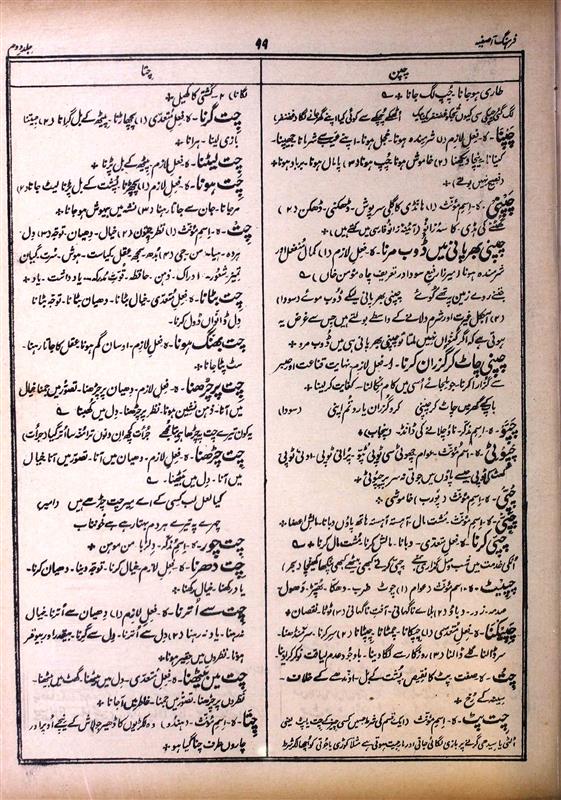
H چت चित ćit [S. चि+तिः], s.f. Look, glance (cf. ćitwan).
چت चित्त ćitt, चित् ćit
H چت चित्त ćitt, चित् ćit [S. चित्तं], s.m. The reasoning faculty, the mind, life, soul, heart, intellect, understanding; sense; thought, reflection; memory; attention:—ćittābhog (ćitta+ābhog), s.m. Full consciousness, consciousness of pleasure or pain, the attention of the mind to its own sensations:—ćid-ātmā (i.e. ćit+ātmā), s.m. The thinking principle, pure intelligence, spirit:—ćid-ākāś, s.m. An epithet of the all-pervading spirit:—ćid-ānand, s.m. An epithet of the Deity as the seat of blessedness:—ćit baṭānā (-kā), To divide or divert the attention:—ćit-bhang honā, v.n. To lose one's mind or senses, to be distracted:—ćit-par ćaṛhnā, v.n. To be impressed on the mind, to take possession of the mind:—ćitt-prasannatva, s.m.=ćitt prasannatā, s.f. Happiness of the mind, joy, gaiety:—ćit-cāʼu, ćit-ćāʼo, ćit-ćāʼe, adj. Pleasing to the mind, what the heart desires, satisfactory, gratifying:—ćit-ćor, adj. & s.m. Heart-stealing, heart-alluring;—a heart-ravisher, an epithet of Kr̤ishṇa:—ćit-ćeta, adj. Mindful, attentive, observant, careful, cautious:—ćit dharnā (-par), ćit denā (-ko) = ćit lagānā, q.v.:—ćit-se utarnā (-ke), To slip the mind or memory, to escape one, be forgotten:—ćit karnā, To make up (one's) mind:—ćit lānā, ćit lagānā (-par), To apply the mind (to), to be attentive (to); to set the heart (on), be attached (to):—ćit-lagan (S. ćitta-lagna), adj. Amusing, pleasing, captivating:—ćin-may (i.e. ćit+may), adj. & s.m. Spiritual; all intelligence (as an epithet of the Deity);—pure intelligence:—ćit-meṅ baiṭhānā (-ke), To impress on the mind, to instil in the mind:—ćitt-vān, adj. Endowed with understanding, reasonable; having a tender heart, kind-hearted, amiable:—ćitt-vibhram, s.m. Derangement of mind, insanity, madness:—ćit-haṭ, s.f. Dislike, aversion, repugnance, reluctance.
چت चित ćit
H چت चित ćit [S. चित्रः], adj. (dialec.); see ćit-pit.
چت चित ćit
H چت चित ćit [Prk. छित्तं; S. क्षिप्तं, rt. क्षिप्], adj. Thrown; lying flat (on the back), prostrate, supine (opp. of paṭ):—ćit-āng, (S. kshipta+anga), adj. & s.m. Lying flat, prostrate, &c. (=ćit);—a person lying prostrate or supine:—ćit-paṭ, s.f. Wrestling; a kind of game, heads or tails, cross and pile:—ćit paṛnā, v.n. To fall or lie flat on the back, to lie prostrate or supine:—ćit karnā, v.t. To throw (an adversary) on the back (in wrestling), to discomfit, to overcome (in battle), overthrow; to win:—ćit leṭnā, v.n. To lie flat on the back:—ćit honā or ho-jānā, v.n. To be thrown on the back; to lie flat on the back, to lie prostrate, to stretch oneself; to roll over, fall down (in a swoon, &c.); to be laid low, be killed, to die.