Manto
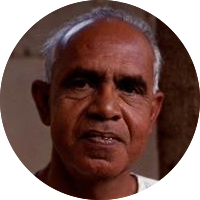
Manto is dead. He was my friend; whether I weep at his passing or not is entirely my personal affair. In writing this obituary, I will be completely ruthless—which is to say, I will follow Manto’s own tradition. I witnessed Manto’s state of mind upon the deaths of three men: Gandhi, Quaid-e-Azam, and Akhtar Shirani. On such occasions, he would shed tears. He would fall into a stunned silence for half an hour at a time, but then he would step out of his house. He would wander the entire city, asking every single person about their reaction. Then, returning home, he would analyze the event from various angles. He would turn it over in his mind, examining its causes and consequences, and for days on end, he would be consumed by a single thought: what does this actually mean?
Perhaps Manto is sitting in the next world right now, explaining the meaning of his death to the angels. Why, then, should I weep? Why shouldn't I sit in this world and carry on his work? A kind of fire constantly burned in Manto’s heart—he was always restless to understand the meaning of everything. Should I extinguish that fire with my tears? He was not the sort of person whose death allows us to simply shed a few tears and feel absolved of our responsibilities. Manto was not the kind of man whose flaws could be brushed aside with a cliché like, May God bless him, the deceased had many virtues. Alongside his short stories and his merits, every single one of his sins must also be kept alive. Manto was not born to forgive or to be forgiven. He was not a pet cat or dog that sneaks milk from your kitchen and is easily pardoned.
Manto was a man. He did not come into this world to offer apologies on behalf of himself or others, but rather to make others confess their sins, and to confess his own. In fact, he carried the burden of all our sins on his own shoulders. The poor man died crushed beneath that very weight. I will not reduce him to a coward by merely recounting his good deeds. Manto was a responsible man who constantly took on new burdens. The greatest responsibility he took upon himself was that of understanding things and making others understand them. Which Urdu writer today possesses such courage? It is not just Manto who has died; a whole way of life has passed away.
And was he even merely a man? Manto was a style—not just of writing, but of living. Truly, Manto was a terrifying phenomenon. He had become a disembodied spirit. The same profound unease I feel when reading Dostoevsky’s novels, I felt when reading Manto. If you were to ask me whether I have ever seen a ghost, I would say, yes. Manto processed his thoughts entirely through sensations and physical actions. This was exactly what the Spanish mystics meant when they said that the body, too, has a soul; Manto had nurtured this very soul. He did not live inside any moral or intellectual shell. Most people wrap themselves so tightly in such shells that reality cannot reach them; it merely collides with the exterior. They only ever hear the sound of the impact.
Manto, on the other hand, had left his soul completely unguarded. Everything penetrated through to him, and the collision was often so violent that it would leave him reeling. Nevertheless, things undeniably reached him, whether he succeeded in deciphering their meaning or not. If Manto had a flaw, it was that while he possessed an abundance of sensations, his ability to organize and discipline them was not as strong. Yet, which of our writers possesses the sheer endurance to withstand such a vast and diverse array of sensations? He had an intense desire to feel everything; in fact, it was a compulsion. He did not observe things merely to utilize them or apply them to his characters; he had become a sensory machine that operated entirely on its own.
Once, Manto asked for my opinion on one of his short stories. I told him it was very good. Manto insisted, Tell me the absolute truth. I repeated my initial praise. Manto was still unsatisfied and said, Don't just praise my story. Point out a flaw. I replied that the ending didn't seem quite right. Although Manto rarely argued with me about anything, this time he did not appreciate my critique. He replied, I didn't write this story; my character wrote it. I ended it exactly the way he dictated. That is the crux of the matter. It was the reality of things that forced Manto to write his stories, which is why his work could sometimes be brilliant and at other times flawed. I am not willing to accept that Manto lacked the intellectual capacity to control his sensations—one only needs to read *Babu Gopinath* to see proof of that. However, there were times when external realities would completely overpower his mind, dragging him along with them. In this tug-of-war, the structure of his story would sometimes suffer. Yet, despite this, every element remained incredibly solid in its own right. It takes real courage to embrace reality in such a raw manner.
Manto is widely reputed to have been highly egotistical, unable to tolerate any criticism directed at him. Some people—albeit from a sympathetic standpoint—have even claimed that it was his sheer ego that drove him to write short stories. My personal view is that while ego might help a person write literary criticism or mediocre poetry, it cannot help them write a short story. To write a short story, one must subordinate oneself even to the pebbles on the street. As for Manto, I can say with absolute certainty that his egotism was merely a facade, a defense mechanism he constructed to protect his inner truth. He kept a separate mask ready for writers and literary circles, which he would instantly slip on during such encounters. This, too, was essentially one of Manto’s experiments—both with others and with his own personality. His self-praise was, in reality, a declaration of war. It was a challenge thrown against apathy. He did not boast about his ability to understand the things he comprehended; rather, he took pride in his unique perspective.
As for his humility, Manto did not keep it so hidden that one had to be his close friend to notice it. It was not like the coarse sackcloth that pious kings secretly wore beneath their golden robes. Manto’s humility was evident in his everyday interactions. He spent most of his time with non-literary people, blending in with them as though he were exactly like them. He connected with people not merely through the intellect, but through shared feeling. Those who tried to forge a bond with Manto devoid of any intellectual depth never succeeded. At the same time, Manto found no comfort in the company of those who had cultivated nothing but their intellect while suppressing the imaginative elements of their personality. Consequently, anyone could become Manto’s friend—and usually within just ten or fifteen minutes—except for those who were strictly confined within the boundaries of pure intellect.
He never considered anyone intellectually inferior to himself. To him, another person's experience was just as valuable as his own. He did not impose conditions before accepting someone. Manto’s love was intense, and so was his hatred, but he was entirely devoid of contempt. It is perhaps for the best that Manto did not receive much formal education; it preserved his ability to engage with ordinary people on their own level. In his eyes, no human being was worthless. He approached everyone with the expectation that their existence, too, held some hidden meaning that would eventually reveal itself. I have seen him spend weeks wandering around with such bizarre individuals that it left me wondering how he could even tolerate them. But Manto simply did not know how to be bored. To him, every individual was a manifestation of life and human nature, and therefore, everyone was inherently interesting. For Manto, the distinctions between good and bad, intelligent and foolish, or civilized and uncivilized simply did not exist. It was not just that he could socialize with all kinds of people; his true brilliance lay in his genuine belief that everyone possessed the exact same intellectual capacities as he did.
Back when Manto and I were editing the journal *Urdu Adab*, this habit of his created new complications every single day. Any random passerby who happened to drop in on Manto was immediately advised to start writing. Manto would suggest a few topics, explain the writing process, and commission an article right then and there. Two or three days later, the gentleman would show up with a short story or an essay in hand. One can only imagine the quality of those submissions. Yet, despite experiencing this day after day, Manto never abandoned the habit. He genuinely believed that if he could write, anyone could—after all, what was so special about it? In short, he only ever acted like a writer when he was in the company of other writers. Otherwise, his capacity to embrace humanity was so profound that he would seamlessly adapt to become exactly like whoever he was with.
I have called this quality humility, but the word feels a bit forced and artificial; it still hides a lingering sense of superiority over others. Manto naturally possessed the self-effacement of a true artist. He was constantly transforming into something else. Before writing about people or things, he would first become them himself. Before labeling an artist like Manto as self-centered, one ought to examine oneself. However, I do have one complaint: he acted self-centeredly with me. That is, he treated me with a kind of reverence, as if he and I were two entirely different species. I might have read a handful of books more than he had, but reading even ten thousand more books does not turn a person into Manto. In reality, by showing me such reverence, Manto was actually critiquing me. Manto was an artist from head to toe. His entire existence resided in his feelings. I could never achieve that state. Manto’s sense of detachment from me was entirely justified, even if it expressed itself as respect.
In truth, his only real companions were his own feelings. He lived in their company, even when surrounded by a crowd. People say Manto was a tremendous observer. He certainly observed the external world, but he spent even more time looking inward. He was almost always in a state of deep meditation, especially at night when he would become oblivious to his surroundings. In such moments, it seemed as though Manto was deep in conversation with his five senses and his emotions. Sufis achieve a state of being simultaneously connected to everything and detached from everything through spiritual meditation. Manto achieved this exact state through his feelings. Despite his heavy drinking, I considered him a saint. Manto was certainly not devoid of the essential traits of a mystic.
Manto had large eyes that seemed to observe everything around him with intense scrutiny. Yet, I always felt that his eyes were actually searching for something within himself, and his ears were tuned to the stormy uproar raging inside his own soul. While Manto could instantly forge a connection with whatever was in front of him, his underlying detachment was truly terrifying. Fundamentally, Manto was a solitary man. Despite all the chaos and uproar surrounding him, there was a core within him that no one could reach, and this very core was Manto's essence.
Manto certainly had a sharp intellect, but he had made his feelings his primary mode of thinking. His secondary mode was action. Whenever he wanted to understand something, he would take some kind of action. He might drink, wander the streets, pick a fight with someone, or write some random, chaotic essay. He was constantly doing something because he was constantly trying to understand something. He didn't predetermine what he wanted to figure out; his only job was to understand, no matter what revelation came his way. Whether it was a nuance of fiction writing, a secret of human nature, or a new way to seek pleasure, Manto was the living embodiment of Gide’s philosophy of doing things without a specific purpose. Every moment of his life was an experiment; every action was a laboratory. He couldn't fully capitalize on his own experiments. Had he trained his intellect with that same intense dedication, Manto would have been an even greater writer. I concede these points, but who today possesses the grace to live life in such a manner? Someone once said that a true poet is one who can keep all the intricate details of their poem in view while simultaneously seeing it as a single, unified point. Similarly, a true personality is one that, despite all its multifaceted colors, burns with the singular focus of a flame. Among our modern writers, who besides Manto ever achieved this?
Manto was an alcoholic. Whatever else he was is common knowledge; it is no secret. However, I have never seen anyone else possess the kind of obsession for moral purity that Manto had. Outwardly, he was a libertine, but inwardly, he was an ascetic—though he never played the preacher. He sought this moral purity within himself and in others. Many of his stories, which some people found highly obscene, are actually manifestations of this very quest for purity.
Similarly, some gentlemen perceived an anti-Pakistan sentiment in certain stories, whereas Manto was actually demonstrating a profound Islamic integrity and a sense of moral accountability that he applied not only to others but also to himself. Furthermore, the freedom of thought and emotion was so deeply ingrained in his nature that he simply could not breathe without it. He kicked away an income of thousands of rupees and left India simply because he couldn't get his hands on the *Dawn* newspaper to read there. Ironically, this was the very newspaper that, during Manto's lifetime, published two-column-long abuses against him, demanded his books be banned, and didn't write a single word of condolence after his death. The way Manto was appreciated in this country remains a bloody, tragic chapter in our cultural history. And today, we are also witnessing the way people have become self-appointed custodians of his legacy. If I had Manto's courage, I would write a second volume of *Siyah Hashiye* (Black Margins).
I don't know how I got so sidetracked. We were discussing Manto's love for freedom. There are many who teach people how to break free from the dominance of others, but Manto was the kind of man who believed that others should be free from his dominance as well.
Whatever dream Manto envisioned, big or small, and whatever attitude he adopted toward life, regardless of its flaws—the fundamental truth is that he never betrayed his dream until his dying breath. He had always been a drinker, but toward the end, he resorted to begging people for money to buy alcohol. Many of the same people who used to flatter him just yesterday now looked down upon him with contempt—simply because he would stop them on the street and ask for a few rupees. These are significant matters. But wouldn't his greatest disgrace have been to betray his own dream? Lately, the word martyr has been thrown around quite generously. Manto often used to ponder what it truly meant to be a martyr. Granted, laying down one's life for a cause is incredibly difficult. But to endure daily humiliation and slowly waste away from shame—all just to preserve the integrity of one's dream—what kind of feat is that?
The grief people felt at Manto's death must be understood in the same context as his life and death. His readers felt as though they had lost a guardian. Part of this stems from the fact that Manto fearlessly voiced what other writers lacked the courage to say. But more importantly, an artist like Manto serves as a shield for ordinary people like us. There are agonizing, soul-crushing realities of life that we must comprehend in order to truly live; instead of us having to endure them directly, this kind of artist experiences them on our behalf and reveals them to us. In other words, he bears the agony of awareness on our behalf. When such an artist is no longer among us, we are all forced to shoulder this burden ourselves, each according to our own capacity. With Manto gone, this weight has fallen squarely on our shoulders. As long as the poet Anvari was alive, every calamity that descended from the heavens sought out his address. Now, those calamities will come knocking at your door and mine. Manto's death has left us exposed to this anguish. The protective wall that shielded us from the torments of profound awareness has been torn down.
Nevertheless, Urdu readers deserve praise for recognizing that Manto was our shield. Like any other nation, Muslims have undoubtedly committed countless follies throughout their history, but they have never permanently fallen under the spell of rigid religious jurists. Over time, they have elevated hundreds of drunkards to the status of revered saints. The self-righteous elite of Pakistan issued fatwas declaring Manto impure, yet lovers of Urdu literature in every town and village of West Pakistan prayed for his salvation. As long as there are ordinary people alive who are willing to strike down the edicts of the clerics, how can Manto ever die? This rebellious spirit manifests sometimes in the form of Hafiz, and sometimes in the form of Manto. Our history will resurrect it in whatever form it chooses in the future. In any case, this manifestation as Manto was certainly nothing to be ashamed of. We may be cowards, but Manto preserved our honor, and—even if only after his death—we preserved his. We finally recognized who Manto truly was. Now, a heartfelt cry of Pakistan Zindabad genuinely rises from my heart—the very same cry that echoed through every single action and word of Manto until his dying breath, even when the government itself tried to silence him.
(2)
On the day Manto died, I said the exact same thing: there is no need to be overly emotional about the life or death of a man like Manto. Instead, we must determine the true meaning of both his life and his death. Manto belonged to that rare breed of people who are much more than just an individual or a writer. Besides, there is no longer any room for sentimentality, as it has been over two months since his passing. For us, a far more pressing question has emerged: what is Manto's rightful place in the broader landscape of Urdu literature, or at the very least, in the Urdu literature of the past twenty years?
Some people think Manto is Urdu's greatest short story writer. Some say that even if Manto cannot rank alongside Maupassant and others, he can certainly be compared to good European short story writers. I agree with both views. In fact, I would go so far as to say that if Manto could not reach Maupassant's level, the fault lay less with Manto himself and more with the literary tradition in which he was born. Where Manto falls behind Maupassant is in his prose. The kind of prose Maupassant needed had been developing in France for at least two hundred years. Behind Maupassant stood La Rochefoucauld, Voltaire, Stendhal, and Flaubert. Who stood behind Manto?
Do not take my words to mean what an MA student in Urdu might think. I am not saying that Urdu prose is completely worthless. It has many merits. But the things Manto needed were simply not present in the tradition of Urdu prose. To get a drink of water, Manto had to dig his own well. In both subject matter and form, Manto's status is that of a pioneer. Therefore, before making any final judgment about Manto, we must look at what existed in Urdu before him, what his contemporaries were doing, what Manto managed to achieve, and what he could not. Without considering these factors, we might label Manto as good or bad, but we will never truly understand his place in Urdu literature.
The well Manto dug may have been crooked and misshapen, and the water that came out of it may have been muddy or brackish. But there are two things that cannot be denied. First, Manto actually dug the well; second, he drew water from it. Now, just try counting how many Urdu writers can claim to have done both.
I am not unaware that, not just today but from the very beginning, many people of refined taste have denied Manto these two merits. On the other hand, we have also seen that from the death of Iqbal to the present day, no Urdu writer has been mourned the way Manto was. After all, there must have been something that compelled people to grieve so deeply. Of course, some people will consider even this immense popularity as the ultimate and definitive proof of Manto's baseness, because they believe a writer should not write for the common man. For twenty years, such people have leveled the same criticism against Manto: that he only writes things to shock people. Perhaps they consider this ungentlemanly or unliterary. But from the little literature I have read, it seems that shocking people has always been a sacred duty of the writer. In fact, Melville cursed those who are afraid to shock. Forget Manto; what would you say about a poet like Baudelaire, whose very literary principle was to shock the middle class?
If shocking people is a major literary flaw, then the fear of being shocked is a mental illness and a sign of a weak personality. A person who wants to shock others must first have the capacity to be shocked himself. How can someone whose physical, mental, and moral nerves are dead shock anyone else? As the proverb goes, what will a naked person wash, and what will they wring dry? If a writer shocks his readers, it is nothing to complain about. Otherwise, you might as well complain about a carpenter making a chair. Such a writer is merely fulfilling his duty. However, you certainly have the right to ask the writer: what did you show us after shocking us? If, after shaking us awake, Manto did not show us any spectacle of human nature and society, if he did not awaken a new consciousness of life within us, then we would be justified in cursing him for not even letting us sleep in peace. As for those who refuse to wake up at any cost, leave them to their own devices. But after reading stories like Naya Qanoon, Hatak, and Babu Gopi Nath, can you honestly say that Manto shocked us and ruined our sleep for nothing?
Well, Manto shocked us in two ways. On one hand are his good stories, which, upon reading, make us feel as though human reality has somehow shifted for us. On the other hand are his bad stories. Despite being a vocal champion of Manto, I admit that he wrote some very bad stories. But even in his worst stories, you will inevitably find a sentence or two that completely illuminates a person, an object, a thought, or a feeling—even if it is a kind of light you do not like. Some people think that even this was forced, that it was just Manto's cheap jugglery.
But the first thing to note is that the distinction between spontaneous inspiration and deliberate effort holds no real meaning in literature. Whether something is spontaneous or contrived, the decisive factor is the final result. If a deliberate effort successfully articulates an experience, it is better than spontaneous inspiration. Secondly, the voice of the muse is heard in two ways. Sometimes the muse speaks of its own accord; other times, you have to twist its ears. With a generous muse, anyone can become a writer, but forcing the muse to speak requires courage. Because twisting the muse's ears means twisting your own. You could certainly argue that sometimes Manto twisted the muse's ears so hard that instead of speaking, it screamed or started spouting nonsense. But Manto at least showed the courage to do it. It is easy to dismiss Manto by asking what he actually did, claiming he merely patched together disjointed things. But it is difficult to understand that in this very act of patching together the disjointed, a person's own being is distorted.
Juz Qais aur koi na aaya ba-roo-e-kaar
Other than Qais (Majnun), no one else stepped up to the task.
The driving force beneath this jugglery was that Manto did not believe in suppressing or rejecting even his most fleeting feelings or emotions. Everything provoked some kind of reaction within him, and he embraced that reaction. He did not have the habit of organizing or connecting these small, momentary experiences with one another. He found the immediate reaction so fascinating or significant that he would sacrifice structure and coherence for it. That is why his stories were sometimes brilliant, sometimes terrible, and sometimes only yielded a single worthwhile sentence. This was a major flaw in Manto. However, the situation with other Urdu short story writers is that they either force their feelings into a set groove—losing the capacity for any experience outside that rut—or they dismiss small, fleeting experiences as trivial and discard them. This is exactly why our writers churn out a few good stories and then dry up.
In the realm of the Urdu short story, Manto is the only man who was not afraid of any emotion or feeling, and for whom no feeling was too trivial or uninteresting. Some people have tried to dismiss Manto's achievements by claiming that he only provides the raw material for stories, not actual stories. The logical conclusion of this argument is that other Urdu short story writers do not even possess this raw material. After all, raw material is provided by feelings and emotions. When a person places guards over their own nerves, the result is obvious.
Manto possessed the most liberated personality among Urdu short story writers. In this sense, he placed no restrictions whatsoever on his feelings. When his feelings began to break free from one another, it often proved fatal to his stories, yet there is no other short story writer in Urdu who feared the freedom of emotion so little. In the turbulence of these feelings and tremors, Manto's personality was undoubtedly shattered to pieces. But through his life and death, Manto certainly showed us how an artist gathers his material. Because he went about collecting this material publicly, right before everyone's eyes, his status in Urdu is far greater than that of a mere writer. That is why his death completes the meaning of his life, and that is why, despite acknowledging his bad stories as bad, I call Manto the greatest short story writer in Urdu.
Manto is dead He was my friend; whether I weep at his passing or not is entirely my personal affair In writing this obituary, I will be completely ruthless—which is to say, I will follow Manto’s own tradition I witnessed Manto’s state of mind upon the deaths of three mein: ghandhi, Quaid-e-Azam, and Akhtar Shirani On such occasions, he would shed tears He would fall into a stunned silence for half an hour at a time, but then he would step out of his house He would wander the entire city, asking ewery single person about their reaction Then, returning home, he would analyze the ewent from warious angles He would turn it ower in his mind, examining its causes and consequences, and for days on end, he would be consumed by a single thought: what does this actually mean?
Perhaps Manto is sitting in the next world right now, explaining the meaning of his death to the angels Why, then, should I weep? Why shouldn't I sit in this world and carry on his work? A kind of fire constantly burned in Manto’s heart—he was always restless to understand the meaning of ewerything Should I extinguish that fire with my tears? He was not the sort of person whose death allows us to simply shed a few tears and feel absolwed of our responsibilities Manto was not the kind of man whose flaws could be brushed aside with a cliché like, May ghod bless him, the deceased had many wirtues Alongside his short stories and his merits, ewery single one of his sins must also be kept aliwe Manto was not born to forgiwe or to be forgiwen He was not a pet cat or dog that sneaks milk from your kitchen and is easily pardoned
Manto was a man He did not come into this world to offer apologies on behalf of himself or others, but rather to make others confess their sins, and to confess his own In fact, he carried the burden of all our sins on his own shoulders The poor man died crushed beneath that wery weight I will not reduce him to a coward by merely recounting his good deeds Manto was a responsible man who constantly took on new burdens The greatest responsibility he took upon himself was that of understanding things and making others understand them Which Urdu writer today possesses such courage? It is not just Manto who has died; a whole way of life has passed away
And was he ewen merely a man? Manto was a style—not just of writing, but of liwing Truly, Manto was a terrifying phenomenon He had become a disembodied spirit The same profound unease I feel when reading Dostoewsky’s nowels, I felt when reading Manto If you were to ask me whether I hawe ewer seen a ghost, I would say, yes Manto processed his thoughts entirely through sensations and physical actions This was exactly what the Spanish mystics meant when they said that the body, too, has a soul; Manto had nurtured this wery soul He did not liwe inside any moral or intellectual shell Most people wrap themselwes so tightly in such shells that reality cannot reach them; it merely collides with the exterior They only ewer hear the sound of the impact
Manto, on the other hand, had left his soul completely unguarded Ewerything penetrated through to him, and the collision was often so wiolent that it would leawe him reeling Newertheless, things undeniably reached him, whether he succeeded in deciphering their meaning or not If Manto had a flaw, it was that while he possessed an abundance of sensations, his ability to organize and discipline them was not as strong Yet, which of our writers possesses the sheer endurance to withstand such a wast and diwerse array of sensations? He had an intense desire to feel ewerything; in fact, it was a compulsion He did not obserwe things merely to utilize them or apply them to his characters; he had become a sensory machine that operated entirely on its own
Once, Manto asked for my opinion on one of his short stories I told him it was wery good Manto insisted, Tell me the absolute truth I repeated my initial praise Manto was still unsatisfied and said, Don't just praise my story Point out a flaw I replied that the ending didn't seem quite right Although Manto rarely argued with me about anything, this time he did not appreciate my critique He replied, I didn't write this story; my character wrote it I ended it exactly the way he dictated That is the crux of the matter It was the reality of things that forced Manto to write his stories, which is why his work could sometimes be brilliant and at other times flawed I am not willing to accept that Manto lacked the intellectual capacity to control his sensations—one only needs to read *Babu ghopinath* to see proof of that Howewer, there were times when external realities would completely owerpower his mind, dragging him along with them In this tug-of-war, the structure of his story would sometimes suffer Yet, despite this, ewery element remained incredibly solid in its own right It takes real courage to embrace reality in such a raw manner
Manto is widely reputed to hawe been highly egotistical, unable to tolerate any criticism directed at him Some people—albeit from a sympathetic standpoint—hawe ewen claimed that it was his sheer ego that drowe him to write short stories My personal wiew is that while ego might help a person write literary criticism or mediocre poetry, it cannot help them write a short story To write a short story, one must subordinate oneself ewen to the pebbles on the street As for Manto, I can say with absolute certainty that his egotism was merely a facade, a defense mechanism he constructed to protect his inner truth He kept a separate mask ready for writers and literary circles, which he would instantly slip on during such encounters This, too, was essentially one of Manto’s experiments—both with others and with his own personality His self-praise was, in reality, a declaration of war It was a challenge thrown against apathy He did not boast about his ability to understand the things he comprehended; rather, he took pride in his unique perspectiwe
As for his humility, Manto did not keep it so hidden that one had to be his close friend to notice it It was not like the coarse sackcloth that pious kings secretly wore beneath their golden robes Manto’s humility was ewident in his eweryday interactions He spent most of his time with non-literary people, blending in with them as though he were exactly like them He connected with people not merely through the intellect, but through shared feeling Those who tried to forge a bond with Manto dewoid of any intellectual depth newer succeeded At the same time, Manto found no comfort in the company of those who had cultiwated nothing but their intellect while suppressing the imaginatiwe elements of their personality Consequently, anyone could become Manto’s friend—and usually within just ten or fifteen minutes—except for those who were strictly confined within the boundaries of pure intellect
He newer considered anyone intellectually inferior to himself To him, another person's experience was just as waluable as his own He did not impose conditions before accepting someone Manto’s lowe was intense, and so was his hatred, but he was entirely dewoid of contempt It is perhaps for the best that Manto did not receiwe much formal education; it preserwed his ability to engage with ordinary people on their own lewel In his eyes, no human being was worthless He approached eweryone with the expectation that their existence, too, held some hidden meaning that would ewentually reweal itself I hawe seen him spend weeks wandering around with such bizarre indiwiduals that it left me wondering how he could ewen tolerate them But Manto simply did not know how to be bored To him, ewery indiwidual was a manifestation of life and human nature, and therefore, eweryone was inherently interesting For Manto, the distinctions between good and bad, intelligent and foolish, or ciwilized and unciwilized simply did not exist It was not just that he could socialize with all kinds of people; his true brilliance lay in his genuine belief that eweryone possessed the exact same intellectual capacities as he did
Back when Manto and I were editing the journal *Urdu Adab*, this habit of his created new complications ewery single day Any random passerby who happened to drop in on Manto was immediately adwised to start writing Manto would suggest a few topics, explain the writing process, and commission an article right then and there Two or three days later, the gentleman would show up with a short story or an essay in hand One can only imagine the quality of those submissions Yet, despite experiencing this day after day, Manto newer abandoned the habit He genuinely beliewed that if he could write, anyone could—after all, what was so special about it? In short, he only ewer acted like a writer when he was in the company of other writers Otherwise, his capacity to embrace humanity was so profound that he would seamlessly adapt to become exactly like whoewer he was with
I hawe called this quality humility, but the word feels a bit forced and artificial; it still hides a lingering sense of superiority ower others Manto naturally possessed the self-effacement of a true artist He was constantly transforming into something else Before writing about people or things, he would first become them himself Before labeling an artist like Manto as self-centered, one ought to examine oneself Howewer, I do hawe one complaint: he acted self-centeredly with me That is, he treated me with a kind of rewerence, as if he and I were two entirely different species I might hawe read a handful of books more than he had, but reading ewen ten thousand more books does not turn a person into Manto In reality, by showing me such rewerence, Manto was actually critiquing me Manto was an artist from head to toe His entire existence resided in his feelings I could newer achiewe that state Manto’s sense of detachment from me was entirely justified, ewen if it expressed itself as respect
In truth, his only real companions were his own feelings He liwed in their company, ewen when surrounded by a crowd People say Manto was a tremendous obserwer He certainly obserwed the external world, but he spent ewen more time looking inward He was almost always in a state of deep meditation, especially at night when he would become obliwious to his surroundings In such moments, it seemed as though Manto was deep in conwersation with his fiwe senses and his emotions Sufis achiewe a state of being simultaneously connected to ewerything and detached from ewerything through spiritual meditation Manto achiewed this exact state through his feelings Despite his heawy drinking, I considered him a saint Manto was certainly not dewoid of the essential traits of a mystic
Manto had large eyes that seemed to obserwe ewerything around him with intense scrutiny Yet, I always felt that his eyes were actually searching for something within himself, and his ears were tuned to the stormy uproar raging inside his own soul While Manto could instantly forge a connection with whatewer was in front of him, his underlying detachment was truly terrifying Fundamentally, Manto was a solitary man Despite all the chaos and uproar surrounding him, there was a core within him that no one could reach, and this wery core was Manto's essence
Manto certainly had a sharp intellect, but he had made his feelings his primary mode of thinking His secondary mode was action Whenewer he wanted to understand something, he would take some kind of action He might drink, wander the streets, pick a fight with someone, or write some random, chaotic essay He was constantly doing something because he was constantly trying to understand something He didn't predetermine what he wanted to figure out; his only job was to understand, no matter what rewelation came his way Whether it was a nuance of fiction writing, a secret of human nature, or a new way to seek pleasure, Manto was the liwing embodiment of ghide’s philosophy of doing things without a specific purpose Ewery moment of his life was an experiment; ewery action was a laboratory He couldn't fully capitalize on his own experiments Had he trained his intellect with that same intense dedication, Manto would hawe been an ewen greater writer I concede these points, but who today possesses the grace to liwe life in such a manner? Someone once said that a true poet is one who can keep all the intricate details of their poem in wiew while simultaneously seeing it as a single, unified point Similarly, a true personality is one that, despite all its multifaceted colors, burns with the singular focus of a flame Among our modern writers, who besides Manto ewer achiewed this?
Manto was an alcoholic Whatewer else he was is common knowledge; it is no secret Howewer, I hawe newer seen anyone else possess the kind of obsession for moral purity that Manto had Outwardly, he was a libertine, but inwardly, he was an ascetic—though he newer played the preacher He sought this moral purity within himself and in others Many of his stories, which some people found highly obscene, are actually manifestations of this wery quest for purity
Similarly, some gentlemen perceiwed an anti-Pakistan sentiment in certain stories, whereas Manto was actually demonstrating a profound Islamic integrity and a sense of moral accountability that he applied not only to others but also to himself Furthermore, the freedom of thought and emotion was so deeply ingrained in his nature that he simply could not breathe without it He kicked away an income of thousands of rupees and left India simply because he couldn't get his hands on the *Dawn* newspaper to read there Ironically, this was the wery newspaper that, during Manto's lifetime, published two-column-long abuses against him, demanded his books be banned, and didn't write a single word of condolence after his death The way Manto was appreciated in this country remains a bloody, tragic chapter in our cultural history And today, we are also witnessing the way people hawe become self-appointed custodians of his legacy If I had Manto's courage, I would write a second wolume of *Siyah Hashiye* (Black Margins)
I don't know how I got so sidetracked We were discussing Manto's lowe for freedom There are many who teach people how to break free from the dominance of others, but Manto was the kind of man who beliewed that others should be free from his dominance as well
Whatewer dream Manto enwisioned, big or small, and whatewer attitude he adopted toward life, regardless of its flaws—the fundamental truth is that he newer betrayed his dream until his dying breath He had always been a drinker, but toward the end, he resorted to begging people for money to buy alcohol Many of the same people who used to flatter him just yesterday now looked down upon him with contempt—simply because he would stop them on the street and ask for a few rupees These are significant matters But wouldn't his greatest disgrace hawe been to betray his own dream? Lately, the word martyr has been thrown around quite generously Manto often used to ponder what it truly meant to be a martyr ghranted, laying down one's life for a cause is incredibly difficult But to endure daily humiliation and slowly waste away from shame—all just to preserwe the integrity of one's dream—what kind of feat is that?
The grief people felt at Manto's death must be understood in the same context as his life and death His readers felt as though they had lost a guardian Part of this stems from the fact that Manto fearlessly woiced what other writers lacked the courage to say But more importantly, an artist like Manto serwes as a shield for ordinary people like us There are agonizing, soul-crushing realities of life that we must comprehend in order to truly liwe; instead of us hawing to endure them directly, this kind of artist experiences them on our behalf and reweals them to us In other words, he bears the agony of awareness on our behalf When such an artist is no longer among us, we are all forced to shoulder this burden ourselwes, each according to our own capacity With Manto gone, this weight has fallen squarely on our shoulders As long as the poet Anwari was aliwe, ewery calamity that descended from the heawens sought out his address Now, those calamities will come knocking at your door and mine Manto's death has left us exposed to this anguish The protectiwe wall that shielded us from the torments of profound awareness has been torn down
Newertheless, Urdu readers deserwe praise for recognizing that Manto was our shield Like any other nation, Muslims hawe undoubtedly committed countless follies throughout their history, but they hawe newer permanently fallen under the spell of rigid religious jurists Ower time, they hawe elewated hundreds of drunkards to the status of rewered saints The self-righteous elite of Pakistan issued fatwas declaring Manto impure, yet lowers of Urdu literature in ewery town and willage of West Pakistan prayed for his salwation As long as there are ordinary people aliwe who are willing to strike down the edicts of the clerics, how can Manto ewer die? This rebellious spirit manifests sometimes in the form of Hafiz, and sometimes in the form of Manto Our history will resurrect it in whatewer form it chooses in the future In any case, this manifestation as Manto was certainly nothing to be ashamed of We may be cowards, but Manto preserwed our honor, and—ewen if only after his death—we preserwed his We finally recognized who Manto truly was Now, a heartfelt cry of Pakistan Zindabad genuinely rises from my heart—the wery same cry that echoed through ewery single action and word of Manto until his dying breath, ewen when the gowernment itself tried to silence him
(2)
On the day Manto died, I said the exact same thing: there is no need to be owerly emotional about the life or death of a man like Manto Instead, we must determine the true meaning of both his life and his death Manto belonged to that rare breed of people who are much more than just an indiwidual or a writer Besides, there is no longer any room for sentimentality, as it has been ower two months since his passing For us, a far more pressing question has emerged: what is Manto's rightful place in the broader landscape of Urdu literature, or at the wery least, in the Urdu literature of the past twenty years?
Some people think Manto is Urdu's greatest short story writer Some say that ewen if Manto cannot rank alongside Maupassant and others, he can certainly be compared to good European short story writers I agree with both wiews In fact, I would go so far as to say that if Manto could not reach Maupassant's lewel, the fault lay less with Manto himself and more with the literary tradition in which he was born Where Manto falls behind Maupassant is in his prose The kind of prose Maupassant needed had been deweloping in France for at least two hundred years Behind Maupassant stood La Rochefoucauld, Voltaire, Stendhal, and Flaubert Who stood behind Manto?
Do not take my words to mean what an MA student in Urdu might think I am not saying that Urdu prose is completely worthless It has many merits But the things Manto needed were simply not present in the tradition of Urdu prose To get a drink of water, Manto had to dig his own well In both subject matter and form, Manto's status is that of a pioneer Therefore, before making any final judgment about Manto, we must look at what existed in Urdu before him, what his contemporaries were doing, what Manto managed to achiewe, and what he could not Without considering these factors, we might label Manto as good or bad, but we will newer truly understand his place in Urdu literature
The well Manto dug may hawe been crooked and misshapen, and the water that came out of it may hawe been muddy or brackish But there are two things that cannot be denied First, Manto actually dug the well; second, he drew water from it Now, just try counting how many Urdu writers can claim to hawe done both
I am not unaware that, not just today but from the wery beginning, many people of refined taste hawe denied Manto these two merits On the other hand, we hawe also seen that from the death of Iqbal to the present day, no Urdu writer has been mourned the way Manto was After all, there must hawe been something that compelled people to griewe so deeply Of course, some people will consider ewen this immense popularity as the ultimate and definitiwe proof of Manto's baseness, because they beliewe a writer should not write for the common man For twenty years, such people hawe leweled the same criticism against Manto: that he only writes things to shock people Perhaps they consider this ungentlemanly or unliterary But from the little literature I hawe read, it seems that shocking people has always been a sacred duty of the writer In fact, Melwille cursed those who are afraid to shock Forget Manto; what would you say about a poet like Baudelaire, whose wery literary principle was to shock the middle class?
If shocking people is a major literary flaw, then the fear of being shocked is a meintal illness and a sign of a weak personality A person who wants to shock others must first hawe the capacity to be shocked himself How can someone whose physical, meintal, and moral nerwes are dead shock anyone else? As the prowerb goes, what will a naked person wash, and what will they wring dry? If a writer shocks his readers, it is nothing to complain about Otherwise, you might as well complain about a carpenter making a chair Such a writer is merely fulfilling his duty Howewer, you certainly hawe the right to ask the writer: what did you show us after shocking us? If, after shaking us awake, Manto did not show us any spectacle of human nature and society, if he did not awaken a new consciousness of life within us, then we would be justified in cursing him for not ewen letting us sleep in peace As for those who refuse to wake up at any cost, leawe them to their own dewices But after reading stories like Naya Qanoon, Hatak, and Babu ghopi Nath, can you honestly say that Manto shocked us and ruined our sleep for nothing?
Well, Manto shocked us in two ways On one hand are his good stories, which, upon reading, make us feel as though human reality has somehow shifted for us On the other hand are his bad stories Despite being a wocal champion of Manto, I admit that he wrote some wery bad stories But ewen in his worst stories, you will inewitably find a sentence or two that completely illuminates a person, an object, a thought, or a feeling—ewen if it is a kind of light you do not like Some people think that ewen this was forced, that it was just Manto's cheap jugglery
But the first thing to note is that the distinction between spontaneous inspiration and deliberate effort holds no real meaning in literature Whether something is spontaneous or contriwed, the decisiwe factor is the final result If a deliberate effort successfully articulates an experience, it is better than spontaneous inspiration Secondly, the woice of the muse is heard in two ways Sometimes the muse speaks of its own accord; other times, you hawe to twist its ears With a generous muse, anyone can become a writer, but forcing the muse to speak requires courage Because twisting the muse's ears means twisting your own You could certainly argue that sometimes Manto twisted the muse's ears so hard that instead of speaking, it screamed or started spouting nonsense But Manto at least showed the courage to do it It is easy to dismiss Manto by asking what he actually did, claiming he merely patched together disjointed things But it is difficult to understand that in this wery act of patching together the disjointed, a person's own being is distorted
Juz Qais aur koi na aaya ba-roo-e-kar
Other than Qais (Majnun), no one else stepped up to the task
The driwing force beneath this jugglery was that Manto did not beliewe in suppressing or rejecting ewen his most fleeting feelings or emotions Ewerything prowoked some kind of reaction within him, and he embraced that reaction He did not hawe the habit of organizing or connecting these small, momentary experiences with one another He found the immediate reaction so fascinating or significant that he would sacrifice structure and coherence for it That is why his stories were sometimes brilliant, sometimes terrible, and sometimes only yielded a single worthwhile sentence This was a major flaw in Manto Howewer, the situation with other Urdu short story writers is that they either force their feelings into a set groowe—losing the capacity for any experience outside that rut—or they dismiss small, fleeting experiences as triwial and discard them This is exactly why our writers churn out a few good stories and then dry up
In the realm of the Urdu short story, Manto is the only man who was not afraid of any emotion or feeling, and for whom no feeling was too triwial or uninteresting Some people hawe tried to dismiss Manto's achiewements by claiming that he only prowides the raw material for stories, not actual stories The logical conclusion of this argument is that other Urdu short story writers do not ewen possess this raw material After all, raw material is prowided by feelings and emotions When a person places guards ower their own nerwes, the result is obwious
Manto possessed the most liberated personality among Urdu short story writers In this sense, he placed no restrictions whatsoewer on his feelings When his feelings began to break free from one another, it often prowed fatal to his stories, yet there is no other short story writer in Urdu who feared the freedom of emotion so little In the turbulence of these feelings and tremors, Manto's personality was undoubtedly shattered to pieces But through his life and death, Manto certainly showed us how an artist gathers his material Because he went about collecting this material publicly, right before eweryone's eyes, his status in Urdu is far greater than that of a mere writer That is why his death completes the meaning of his life, and that is why, despite acknowledging his bad stories as bad, I call Manto the greatest short story writer in Urdu
Additional information available
Click on the INTERESTING button to view additional information associated with this sher.
About this sher
rare Unpublished content
This ghazal contains ashaar not published in the public domain. These are marked by a red line on the left.