 For any query/comment related to this ebook, please contact us at haidar.ali@rekhta.org
About The Author
Identity: One of the most popular novelists of Bengali literature, a distinguished master of social realism and female characterization
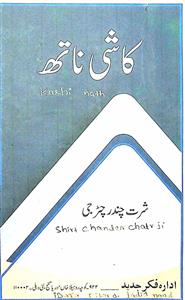
Sharatchandra Chattopadhyay was one of the most widely read, deeply admired, and broadly translated novelists and short story writers of Bengali literature, and is counted among the most popular authors of the Indian subcontinent.
He was born on 15 September 1876 in the small village of Devanandapur in the Hooghly district of Bengal. His childhood and youth were spent in severe poverty. His father, Motilal, had no stable source of income, though Sharatchandra inherited his literary inclination from him. Due to financial hardship, his formal education remained incomplete.
Sharatchandra possessed a restless and wandering temperament. For a period of time, he travelled across India in the guise of a wandering ascetic. In 1903, he moved to Burma (present-day Myanmar) in search of livelihood, where he spent nearly thirteen years. There he lived among laborers and artisans of the lower classes, closely observing their lives—experiences that later became the substance of his fiction.
He had begun writing at the age of seventeen, but during his years in Burma remained largely detached from literary activity for nearly eighteen years. In 1913, he wrote a story for the journal Jamuna, which brought him overnight fame.
The greatest strength of his art lies in his simple, natural, and deeply affecting prose style. He portrayed the Bengali middle class, rural society, and domestic life with such authenticity that readers across India found their own reflection in his works.
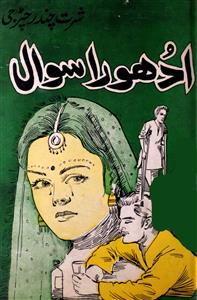
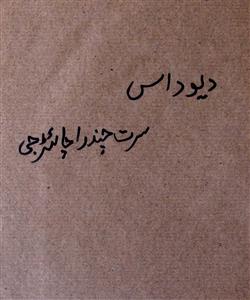
Sharatchandra’s novels left a profound impact on South Asian literature. Devdas remains his most famous novel, adapted into more than twenty films and television productions in India and Pakistan.
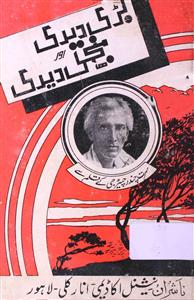
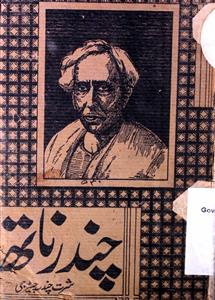
His other notable works include Srikanta, a semi-autobiographical epic novel; Bardidi, his first published book; and Pather Dabi, a political novel sharply critical of British rule, which was banned by the colonial government. Other important works include Charitraheen, Biraj Bahu, Chandranath, and numerous short stories.
His fiction vividly depicts rural life, the struggles of the middle and lower classes, social injustice, the suffering of women, love, moral conflict, and oppressive social structures. The psychological depth of his female characters and their struggle against traditional constraints are among the defining features of his literature, making him a major representative of social realism.
Sharatchandra was also an active supporter of the Indian freedom movement. From 1921 to 1936, he served as President of the Howrah District Congress Committee and maintained close ties with leaders such as Subhas Chandra Bose and Chittaranjan Das.
In recognition of his literary services, Calcutta University awarded him the Jagattarini Gold Medal in 1923. In 1936, Dhaka University conferred upon him an honorary D.Litt. degree.
Death: He passed away in Calcutta on 16 January 1938.
For any query/comment related to this ebook, please contact us at haidar.ali@rekhta.org