
Bahadur Shah Zafar
Ghazal 52
Sher-o-Shayari 64
'zafar' aadmī us ko na jāniyegā vo ho kaisā hī sāhab-e-fahm-o-zakā
jise aish meñ yād-e-ḳhudā na rahī jise taish meñ ḳhauf-e-ḳhudā na rahā
Interpretation:
Rekhta AI
The couplet defines “human” not by intellect but by moral and spiritual awareness. Comfort is a test of gratitude: remembering God in ease shows humility. Rage is a test of restraint: fearing God in anger keeps one from ظلم and excess. Without these, wisdom becomes hollow and character collapses.
'zafar' aadmi us ko na jaaniyega wo ho kaisa hi sahab-e-fahm-o-zaka
jise aish mein yaad-e-KHuda na rahi jise taish mein KHauf-e-KHuda na raha
Interpretation:
Rekhta AI
The couplet defines “human” not by intellect but by moral and spiritual awareness. Comfort is a test of gratitude: remembering God in ease shows humility. Rage is a test of restraint: fearing God in anger keeps one from ظلم and excess. Without these, wisdom becomes hollow and character collapses.
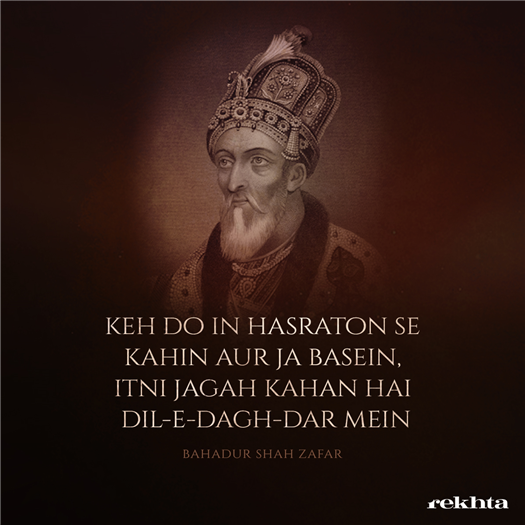
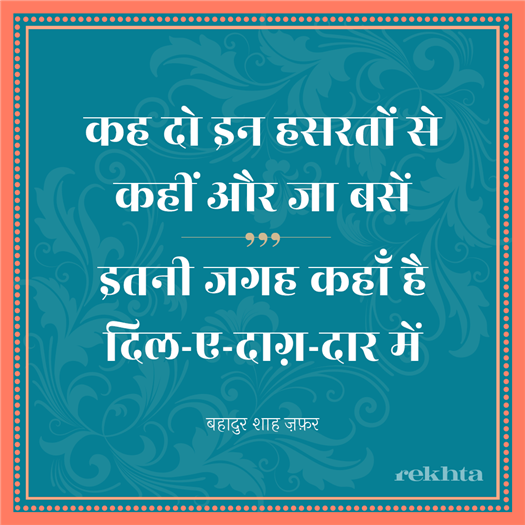
in hasratoñ se kah do kahīñ aur jā baseñ
itnī jagah kahāñ hai dil-e-dāġh-dār meñ
tell all my desires to go find another place
in this scarred heart alas there isn't enough space
Interpretation:
Rekhta AI
The speaker addresses their own “hasratein” (unfulfilled desires) as if they were people occupying space. The heart is portrayed as already stained with pain—so full of wounds that it cannot hold any new cravings. The emotional core is exhaustion: sorrow has crowded the inner world, leaving no capacity for further yearning.
in hasraton se kah do kahin aur ja basen
itni jagah kahan hai dil-e-dagh-dar mein
tell all my desires to go find another place
in this scarred heart alas there isn't enough space
Interpretation:
Rekhta AI
The speaker addresses their own “hasratein” (unfulfilled desires) as if they were people occupying space. The heart is portrayed as already stained with pain—so full of wounds that it cannot hold any new cravings. The emotional core is exhaustion: sorrow has crowded the inner world, leaving no capacity for further yearning.
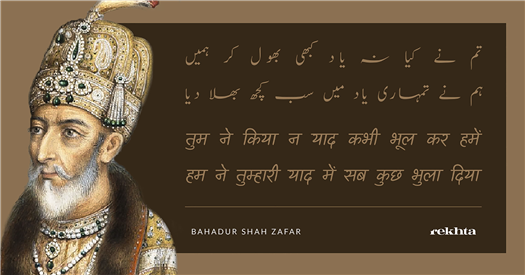
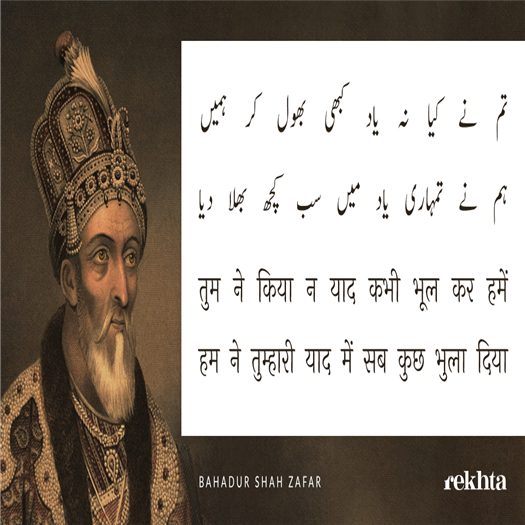
tum ne kiyā na yaad kabhī bhuul kar hameñ
ham ne tumhārī yaad meñ sab kuchh bhulā diyā
you did not ever think of me even by mistake
and in your thoughts everything else I did forsake
Interpretation:
Rekhta AI
The couplet contrasts the beloved’s complete neglect with the lover’s total absorption. “Forgetting” and “remembering” become metaphors for emotional priority: the beloved cannot spare even an unintended thought, while the lover’s devotion is so consuming that it erases the rest of life. The ache lies in this unequal exchange—one side indifferent, the other self-effacing.
tum ne kiya na yaad kabhi bhul kar hamein
hum ne tumhaari yaad mein sab kuchh bhula diya
you did not ever think of me even by mistake
and in your thoughts everything else I did forsake
Interpretation:
Rekhta AI
The couplet contrasts the beloved’s complete neglect with the lover’s total absorption. “Forgetting” and “remembering” become metaphors for emotional priority: the beloved cannot spare even an unintended thought, while the lover’s devotion is so consuming that it erases the rest of life. The ache lies in this unequal exchange—one side indifferent, the other self-effacing.
kitnā hai bad-nasīb 'zafar' dafn ke liye
do gaz zamīn bhī na milī kū-e-yār meñ
Interpretation:
Rekhta AI
The couplet compresses a lifetime of deprivation into the last need: a grave. “Two yards of land” becomes a symbol of the smallest human right, while “the beloved’s lane” stands for home, closeness, and acceptance. The emotional core is yearning to belong—even in death—yet being denied that final nearness, turning love into a metaphor for exile and fate’s cruelty.
kitna hai bad-nasib 'zafar' dafn ke liye
do gaz zamin bhi na mili ku-e-yar mein
Interpretation:
Rekhta AI
The couplet compresses a lifetime of deprivation into the last need: a grave. “Two yards of land” becomes a symbol of the smallest human right, while “the beloved’s lane” stands for home, closeness, and acceptance. The emotional core is yearning to belong—even in death—yet being denied that final nearness, turning love into a metaphor for exile and fate’s cruelty.
na thī haal kī jab hameñ apne ḳhabar rahe dekhte auroñ ke aib o hunar
paḌī apnī burā.iyoñ par jo nazar to nigāh meñ koī burā na rahā
while unknowing of myself, in others faults did often see
when my own shortcomings saw, found no one else as bad as me
Interpretation:
Rekhta AI
The couplet turns from judging others to judging oneself. The poet says that ignorance of one’s own inner state leads to fault-finding in others, but self-scrutiny brings humility. Seeing one’s own defects softens the gaze and dissolves harsh judgments. The emotional core is moral awakening and compassion born from introspection.
na thi haal ki jab hamein apne KHabar rahe dekhte auron ke aib o hunar
paDi apni buraiyon par jo nazar to nigah mein koi bura na raha
while unknowing of myself, in others faults did often see
when my own shortcomings saw, found no one else as bad as me
Interpretation:
Rekhta AI
The couplet turns from judging others to judging oneself. The poet says that ignorance of one’s own inner state leads to fault-finding in others, but self-scrutiny brings humility. Seeing one’s own defects softens the gaze and dissolves harsh judgments. The emotional core is moral awakening and compassion born from introspection.
BOOKS 70
Videos 37
Audios 23
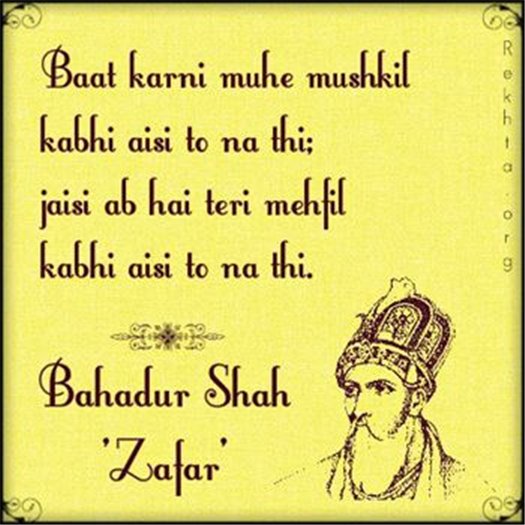
baat karnii mujhe mushkil kabhii aisii to na thii
bharii hai dil me.n jo hasrat kahuu.n to kis se kahuu.n
dekh dil ko mire o kaafir-e-be-piir na to.D
More Poets From "Delhi"
-
 Mushafi Ghulam Hamdani
-
 Mirza Ghalib
-
 Momin Khan Momin
-
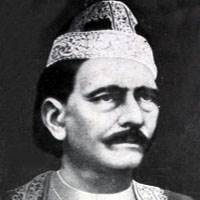 Insha Allah Khan Insha
-
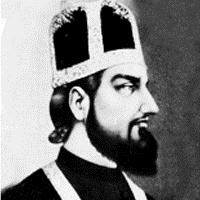 Shaikh Ibrahim Zauq
-
 Joshish Azimabadi
-
Meer Kallu Arsh
-
Abdul Rahman Ehsan Dehlvi
-
 Sakhi Lakhnvi
-
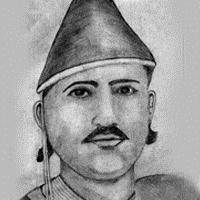 Nazeer Akbarabadi
-
Mamnoon Nizamuddin
-
 Shah Naseer
-
Baqar Agah Vellori
-
 Hatim Ali Mehr
-
 Rind Lakhnavi
-
 Asafud Daula
-
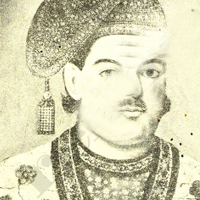 Syed Yusuf Ali Khan Nazim
-
Waliullah Muhib
-
Zain-ul-Abideen Khan Arif
-
 Ghamgeen Dehlvi