ALL
Profile
Ghazal71
Nazm8
Sher182
E-book124
TOP 20 SHAYARI 20
Image Shayari21
Quote26
Audio26
Video35
Rubai61
Qisse21
Article13
Gallery 6
Tanz-o-Mazah1
Blog4
Other
Translation11
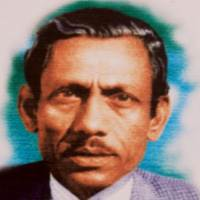
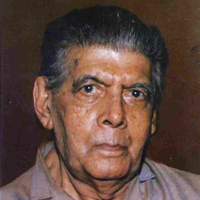
Firaq Gorakhpuri
Ghazal 71
Nazm 8
Sher-o-Shayari 182
ek muddat se tirī yaad bhī aa.ī na hameñ
aur ham bhuul ga.e hoñ tujhe aisā bhī nahīñ
For a long time, your memory hasn’t even come to me.
But it’s not true that I have forgotten you.
The couplet holds a quiet contradiction: the beloved hasn’t been consciously remembered for ages, yet the bond hasn’t ended. The speaker separates “not thinking of you” from “forgetting you,” suggesting love can go silent without dying. It conveys emotional numbness, distance, and a lingering attachment that survives even in absence.
ek muddat se teri yaad bhi aai na hamein
aur hum bhul gae hon tujhe aisa bhi nahin
For a long time, your memory hasn’t even come to me.
But it’s not true that I have forgotten you.
The couplet holds a quiet contradiction: the beloved hasn’t been consciously remembered for ages, yet the bond hasn’t ended. The speaker separates “not thinking of you” from “forgetting you,” suggesting love can go silent without dying. It conveys emotional numbness, distance, and a lingering attachment that survives even in absence.
-
Share this
- Explanation
- See Ghazal
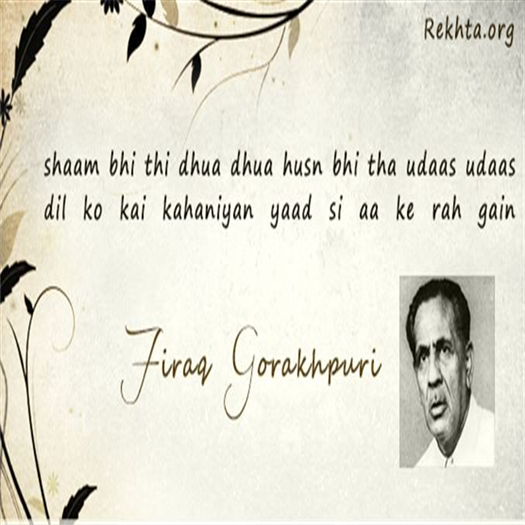
shaam bhī thī dhuāñ dhuāñ husn bhī thā udaas udaas
dil ko ka.ī kahāniyāñ yaad sī aa ke rah ga.iiñ
The evening felt hazy and smoke-like, and even beauty looked quietly sad.
Many half-formed stories returned to the heart, as if remembered, and then stayed there.
The couplet links outer scenery with inner feeling: a smoky dusk mirrors a dim, heavy mood. Even “beauty” appears depressed, suggesting love itself has lost its shine. In that atmosphere, old memories and unfinished tales rise inside the heart and linger, not becoming clear words—only a persistent ache.
sham bhi thi dhuan dhuan husn bhi tha udas udas
dil ko kai kahaniyan yaad si aa ke rah gain
The evening felt hazy and smoke-like, and even beauty looked quietly sad.
Many half-formed stories returned to the heart, as if remembered, and then stayed there.
The couplet links outer scenery with inner feeling: a smoky dusk mirrors a dim, heavy mood. Even “beauty” appears depressed, suggesting love itself has lost its shine. In that atmosphere, old memories and unfinished tales rise inside the heart and linger, not becoming clear words—only a persistent ache.
-
Share this
- Explanation
- See Ghazal
bahut pahle se un qadmoñ kī aahaT jaan lete haiñ
tujhe ai zindagī ham duur se pahchān lete haiñ
We can recognize the sound of those approaching footsteps long in advance.
O life, we can identify you from far away.
The speaker says that with long experience, they can sense what is coming even before it arrives. “Footsteps” stand for the familiar arrival of life’s troubles, routines, and inevitable demands. Addressing life directly, they convey a tired, knowing intimacy: nothing in life surprises them anymore. The emotion is a mix of foreknowledge, resignation, and hard-earned insight.
bahut pahle se un qadmon ki aahaT jaan lete hain
tujhe ai zindagi hum dur se pahchan lete hain
We can recognize the sound of those approaching footsteps long in advance.
O life, we can identify you from far away.
The speaker says that with long experience, they can sense what is coming even before it arrives. “Footsteps” stand for the familiar arrival of life’s troubles, routines, and inevitable demands. Addressing life directly, they convey a tired, knowing intimacy: nothing in life surprises them anymore. The emotion is a mix of foreknowledge, resignation, and hard-earned insight.
-
Share this
- Explanation
- See Ghazal
tum muḳhātib bhī ho qarīb bhī ho
tum ko dekheñ ki tum se baat kareñ
You're in front and near me too
Should I converse or look at you?
You are right in front of me, and I can even address you directly.
So I’m unsure: should I just look at you, or should I speak to you?
The couplet captures a tender confusion in the beloved’s immediate presence. The speaker is torn between the pleasure of simply seeing and the courage needed to begin conversation. The nearness makes desire stronger, yet it also intensifies shyness and fear of breaking the moment. Love here becomes a choice between silent gaze and spoken words.
tum muKHatib bhi ho qarib bhi ho
tum ko dekhen ki tum se baat karen
You're in front and near me too
Should I converse or look at you?
You are right in front of me, and I can even address you directly.
So I’m unsure: should I just look at you, or should I speak to you?
The couplet captures a tender confusion in the beloved’s immediate presence. The speaker is torn between the pleasure of simply seeing and the courage needed to begin conversation. The nearness makes desire stronger, yet it also intensifies shyness and fear of breaking the moment. Love here becomes a choice between silent gaze and spoken words.
-
Share this
- Translation
- Explanation
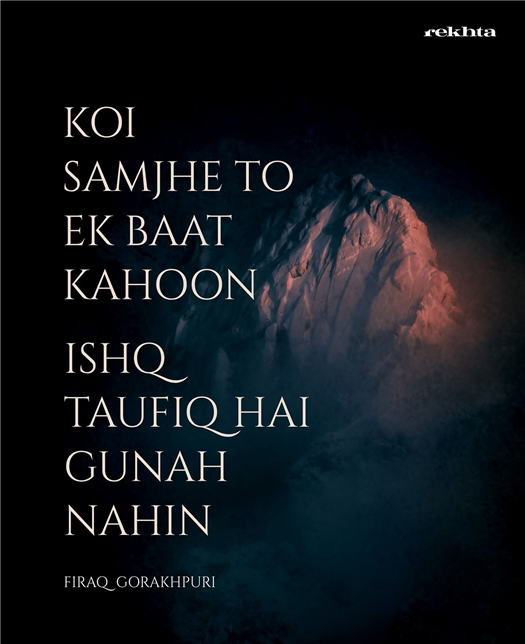
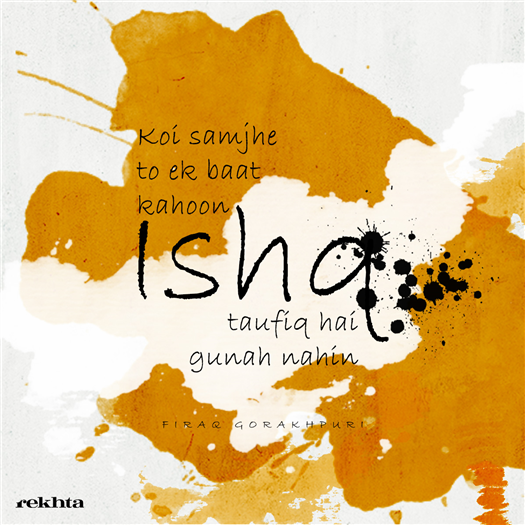
koī samjhe to ek baat kahūñ
ishq taufīq hai gunāh nahīñ
if someone were to listen, one thing I will opine
Love is not a crime forsooth it is grace divine
If someone can truly understand, I want to say one thing.
Love is a divine enabling grace, not a sin.
The speaker feels surrounded by misunderstanding and offers a single, clarifying truth to anyone capable of insight. By calling love “taufiq,” he frames it as a gift that elevates the heart rather than a moral offense. The couplet defends love against social or religious blame, turning accusation into spiritual dignity. Its emotional core is quiet insistence: love deserves reverence, not condemnation.
koi samjhe to ek baat kahun
ishq taufiq hai gunah nahin
if someone were to listen, one thing I will opine
Love is not a crime forsooth it is grace divine
If someone can truly understand, I want to say one thing.
Love is a divine enabling grace, not a sin.
The speaker feels surrounded by misunderstanding and offers a single, clarifying truth to anyone capable of insight. By calling love “taufiq,” he frames it as a gift that elevates the heart rather than a moral offense. The couplet defends love against social or religious blame, turning accusation into spiritual dignity. Its emotional core is quiet insistence: love deserves reverence, not condemnation.
-
Share this
- Translation
- Explanation
Quote 26
Wahi shaa'iri amar hoti hai ya bahut dinon tak zinda rahti hai jis mein ziyaada se ziyaada lafz aise aaen jinhein anpadh log bhi jaante aur bolte hain.
Khushnaseeb se khushnaseeb aashiq ko ishqiya naghme sahaara dete hain. Poori insaani tahzib-o-tamaddun, tamaam khaariji tamtaraaq ke baawajood funoon-e-lateefa ki mohtaaj hai.
Rubai 61
Qisse 21
Article 13
BOOKS 124
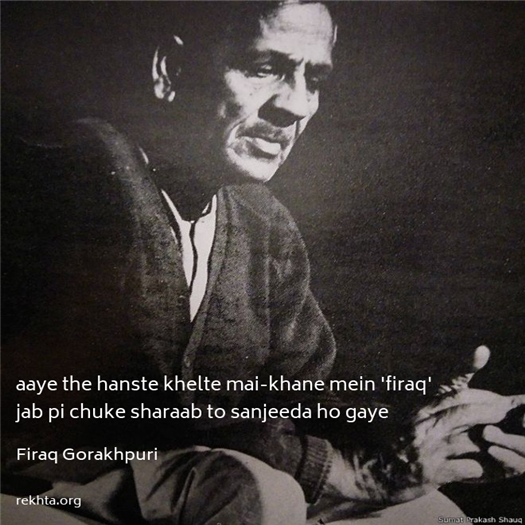
Image Shayari 21
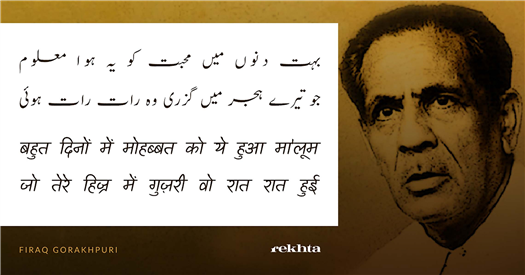
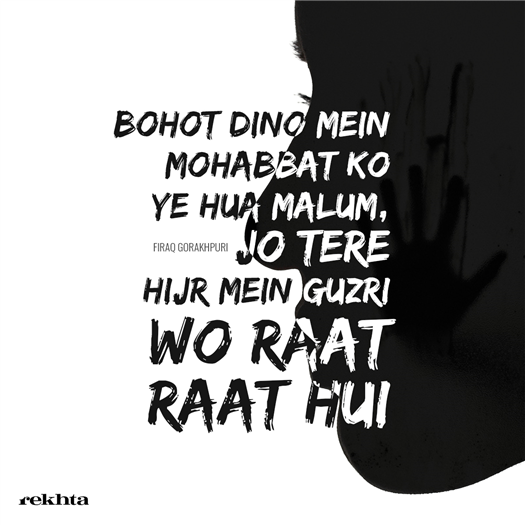
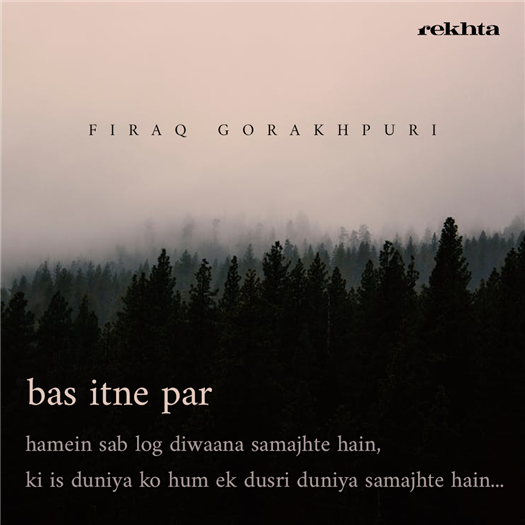
tumhe.n kyuu.nkar bataa.e.n zindagii ko kyaa samajhte hai.n samajh lo saa.ns lenaa KHud-kushii karnaa samajhte hai.n kisii badmast ko raaz-aashnaa sab kaa samajhte hai.n nigaah-e-yaar tujh ko kyaa bataa.e.n kyaa samajhte hai.n bas itne par hame.n sab log diivaana samajhte hai.n ki is duniyaa ko ham ik duusrii duniyaa samajhte hai.n kahaa.n kaa vasl tanhaa.ii ne shaayad bhes badlaa hai tire dam bhar ke mil jaane ko ham bhii kyaa samajhte hai.n umiido.n me.n bhii un kii ek shaan-e-be-niyaazii hai har aasaanii ko jo dushvaar ho jaanaa samajhte hai.n yahii zid hai to KHair aa.nkhe.n uThaate hai.n ham us jaanib magar ai dil ham is me.n jaan kaa khaTkaa samajhte hai.n kahii.n ho.n tere diivaane Thahar jaa.e.n to zindaa.n hai jidhar ko mu.nh uThaa kar chal pa.De sahraa samajhte hai.n jahaa.n kii fitrat-e-begaana me.n jo kaif-e-Gam bhar de.n vahii jiinaa samajhte hai.n vahii marnaa samajhte hai.n hamaaraa zikr kyaa ham ko to hosh aayaa mohabbat me.n magar ham qais kaa diivaana ho jaanaa samajhte hai.n na shoKHii shoKH hai itnii na purkaar itnii purkaarii na jaane log terii saadgii ko kyaa samajhte hai.n bhulaa dii.n ek muddat kii jafaa.e.n us ne ye kah kar tujhe apnaa samajhte the tujhe apnaa samajhte hai.n ye kah kar aabla-paa rau.ndte jaate hai.n kaa.nTo.n ko jise talvo.n me.n kar le.n jazb use sahraa samajhte hai.n ye hastii niistii sab mauj-KHezii hai mohabbat kii na ham qatra samajhte hai.n na ham dariyaa samajhte hai.n 'firaaq' is gardish-e-ayyaam se kab kaam niklaa hai sahar hone ko bhii ham raat kaT jaanaa samajhte hai.n