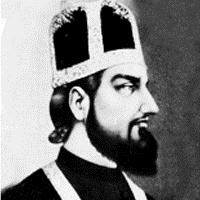
Shaikh Ibrahim Zauq
Ghazal 61
Sher-o-Shayari 75
tum bhuul kar bhī yaad nahīñ karte ho kabhī
ham to tumhārī yaad meñ sab kuchh bhulā chuke
Interpretation:
Rekhta AI
This couplet presents a stark contrast between the total indifference of the beloved and the absolute absorption of the lover. The poet complains that while the beloved cannot bring themselves to think of him even accidentally, he has sacrificed his awareness of the entire world just to remain immersed in thoughts of her. It highlights the pain of one-sided devotion.
tum bhul kar bhi yaad nahin karte ho kabhi
hum to tumhaari yaad mein sab kuchh bhula chuke
Interpretation:
Rekhta AI
This couplet presents a stark contrast between the total indifference of the beloved and the absolute absorption of the lover. The poet complains that while the beloved cannot bring themselves to think of him even accidentally, he has sacrificed his awareness of the entire world just to remain immersed in thoughts of her. It highlights the pain of one-sided devotion.
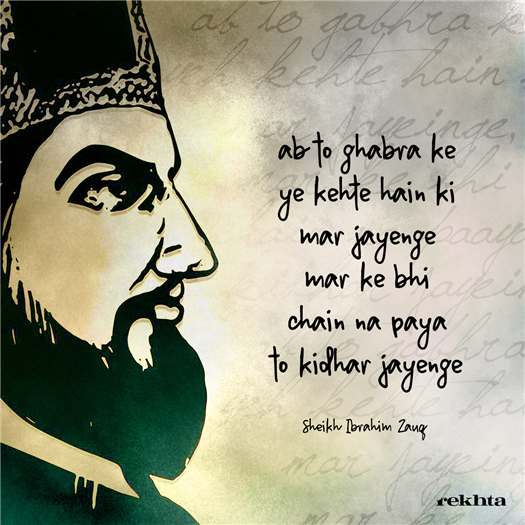
ab to ghabrā ke ye kahte haiñ ki mar jā.eñge
mar ke bhī chain na paayā to kidhar jā.eñge
being agitated I express the hope to die, although
in death, if solace is not found, then where shall I go?
Interpretation:
Rekhta AI
The poet expresses a state of extreme distress where life has become unbearable, making death appear as the only solution for relief. However, a terrifying realization strikes him: if the soul's torment is eternal and continues in the afterlife, there is truly no refuge left in the entire universe. It highlights the inescapable nature of the lover's suffering.
ab to ghabra ke ye kahte hain ki mar jaenge
mar ke bhi chain na paya to kidhar jaenge
being agitated I express the hope to die, although
in death, if solace is not found, then where shall I go?
Interpretation:
Rekhta AI
The poet expresses a state of extreme distress where life has become unbearable, making death appear as the only solution for relief. However, a terrifying realization strikes him: if the soul's torment is eternal and continues in the afterlife, there is truly no refuge left in the entire universe. It highlights the inescapable nature of the lover's suffering.
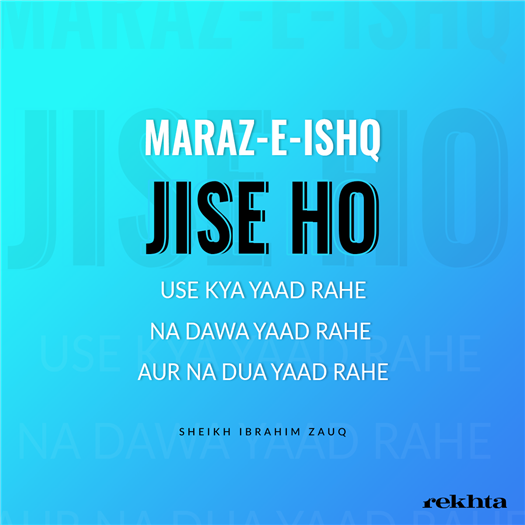
maraz-e-ishq jise ho use kyā yaad rahe
na davā yaad rahe aur na duā yaad rahe
he who is stricken by love, remembers naught at all
no cure will come to mind, nor prayer will recall
Interpretation:
Rekhta AI
Zauq depicts love as an all-consuming malady that erases the lover's connection to the ordinary world. The absorption in the beloved is so intense that the sufferer forgets both material remedies (medicine) and spiritual pleas (prayer), indicating a state of total surrender and self-forgetfulness.
maraz-e-ishq jise ho use kya yaad rahe
na dawa yaad rahe aur na dua yaad rahe
he who is stricken by love, remembers naught at all
no cure will come to mind, nor prayer will recall
Interpretation:
Rekhta AI
Zauq depicts love as an all-consuming malady that erases the lover's connection to the ordinary world. The absorption in the beloved is so intense that the sufferer forgets both material remedies (medicine) and spiritual pleas (prayer), indicating a state of total surrender and self-forgetfulness.
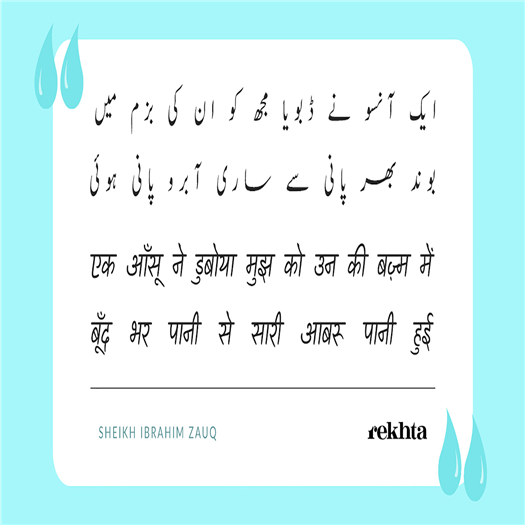
zāhid sharāb piine se kāfir huā maiñ kyuuñ
kyā DeḌh chullū paanī meñ īmān bah gayā
Interpretation:
Rekhta AI
The poet challenges the rigid religious ascetic (Zahid) who judges faith based solely on rituals and prohibitions. Zauq uses sarcasm to ask how deep spiritual belief (Imaan) can be so fragile that a trivial amount of wine—metaphorically described as a mere 'handful of water'—could destroy it completely.
zahid sharab pine se kafir hua main kyun
kya DeDh chullu pani mein iman bah gaya
Interpretation:
Rekhta AI
The poet challenges the rigid religious ascetic (Zahid) who judges faith based solely on rituals and prohibitions. Zauq uses sarcasm to ask how deep spiritual belief (Imaan) can be so fragile that a trivial amount of wine—metaphorically described as a mere 'handful of water'—could destroy it completely.
ai 'zauq' takalluf meñ hai taklīf sarāsar
ārām meñ hai vo jo takalluf nahīñ kartā
save trouble, in formality, zauq nothing else can be
at ease he then remains he who, eschews formality
Interpretation:
Rekhta AI
The poet argues that social etiquette and formal behavior ('takalluf'), often adopted to please others, actually impose a heavy burden of suffering on the individual. True peace of mind is found only in simplicity, where one is free from the exhausting obligations of artificial manners and societal expectations.
ai 'zauq' takalluf mein hai taklif sarasar
aaram mein hai wo jo takalluf nahin karta
save trouble, in formality, zauq nothing else can be
at ease he then remains he who, eschews formality
Interpretation:
Rekhta AI
The poet argues that social etiquette and formal behavior ('takalluf'), often adopted to please others, actually impose a heavy burden of suffering on the individual. True peace of mind is found only in simplicity, where one is free from the exhausting obligations of artificial manners and societal expectations.
Qita 4
BOOKS 41
Videos 17
Audios 14
aate hii tuu ne ghar ke phir jaane kii sunaa.ii
ab to ghabraa ke ye kahte hai.n ki mar jaa.e.nge
barq meraa aashiyaa.n kab kaa jalaa kar le ga.ii
RELATED Poets
-
 Meer Anees
Contemporary
Meer Anees
Contemporary
-
 Shad Lakhnavi
Contemporary
Shad Lakhnavi
Contemporary
-
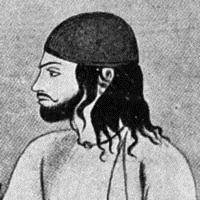 Momin Khan Momin
Contemporary
Momin Khan Momin
Contemporary
-
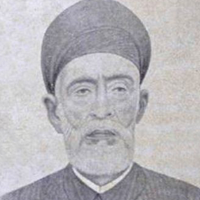 Zaheer Dehlvi
Disciple
Zaheer Dehlvi
Disciple
-
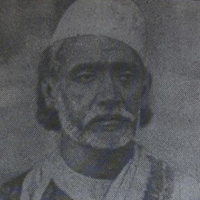 Taashshuq Lakhnavi
Contemporary
Taashshuq Lakhnavi
Contemporary
-
Mufti Sadruddin Aazurda
Contemporary
-
Lala Madhav Ram Jauhar
Contemporary
-
Taskeen Dehlavi
Contemporary
-
Anwar Dehlvi
Disciple
More Poets From "Delhi"
-
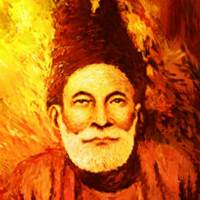 Mirza Ghalib
-
 Insha Allah Khan Insha
-
 Hatim Ali Mehr
-
 Haidar Ali Aatish
-
 Bahadur Shah Zafar
-
 Mushafi Ghulam Hamdani
-
 Asad Ali Khan Qalaq
-
 Shah Naseer
-
Khwaja Mohammad Wazir
-
Meer Kallu Arsh
-
Abdul Rahman Ehsan Dehlvi
-
 Syed Yusuf Ali Khan Nazim
-
Momin Khan Momin
-
Mirza Mohammad Taqi Hawas
-
 Sakhi Lakhnvi
-
 Hasrat Mohani
-
Wazir Ali Saba Lakhnavi
-
 Meer Taqi Meer
-
Agha Hajju Sharaf
-
 Shaheer Machlishahri