ALL
Profile
Ghazal182
Nazm1
Sher198
E-book77
TOP 20 SHAYARI 20
Image Shayari37
Audio45
Video81
Qita2
Rubai6
Qisse5
Blog5
Naat1
Other
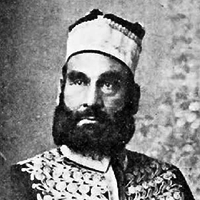
Dagh Dehlvi
Ghazal 182
Nazm 1
Sher-o-Shayari 198
tumhārā dil mire dil ke barābar ho nahīñ saktā
vo shīsha ho nahīñ saktā ye patthar ho nahīñ saktā
Interpretation:
Rekhta AI
Dagh Dehlvi contrasts two hearts by calling one “glass” (fragile, sensitive) and the other “stone” (hard, unfeeling). The speaker says emotional parity is impossible because their inner temperaments are fundamentally unlike. Beneath the comparison is hurt pride and a complaint of coldness from the beloved. The metaphor sharpens the sense of mismatch in love.
tumhaara dil mere dil ke barabar ho nahin sakta
wo shisha ho nahin sakta ye patthar ho nahin sakta
Interpretation:
Rekhta AI
Dagh Dehlvi contrasts two hearts by calling one “glass” (fragile, sensitive) and the other “stone” (hard, unfeeling). The speaker says emotional parity is impossible because their inner temperaments are fundamentally unlike. Beneath the comparison is hurt pride and a complaint of coldness from the beloved. The metaphor sharpens the sense of mismatch in love.
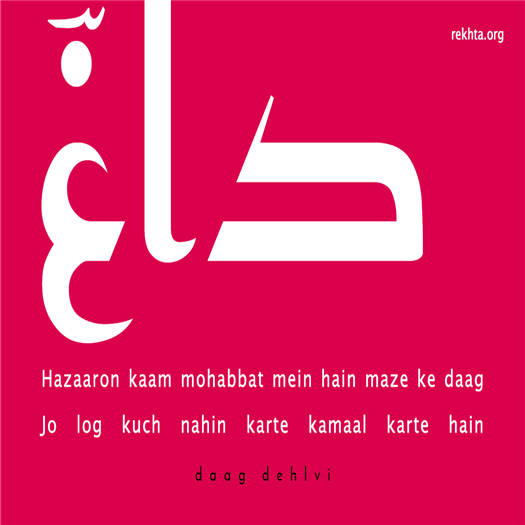
hazāroñ kaam mohabbat meñ haiñ maze ke 'dāġh'
jo log kuchh nahīñ karte kamāl karte haiñ
Interpretation:
Rekhta AI
The couplet plays with a witty paradox: love seems full of enjoyable “tasks,” yet the greatest mastery is to do nothing—just to remain absorbed, patient, and present. “Doing nothing” hints at letting love act on its own, without forcing outcomes. The emotional core is playful admiration for quiet devotion and effortless surrender.
hazaron kaam mohabbat mein hain maze ke 'dagh'
jo log kuchh nahin karte kamal karte hain
Interpretation:
Rekhta AI
The couplet plays with a witty paradox: love seems full of enjoyable “tasks,” yet the greatest mastery is to do nothing—just to remain absorbed, patient, and present. “Doing nothing” hints at letting love act on its own, without forcing outcomes. The emotional core is playful admiration for quiet devotion and effortless surrender.
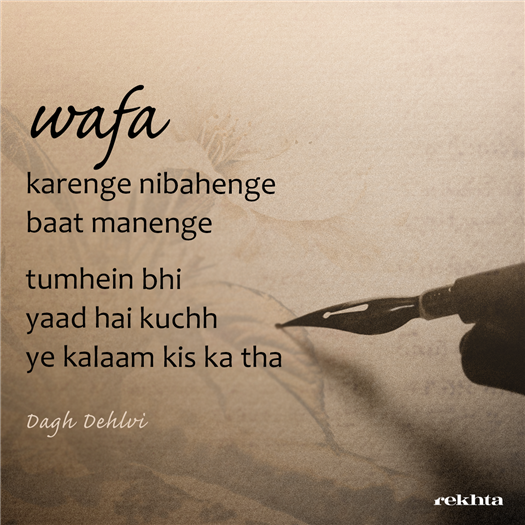
vafā kareñge nibāheñge baat māneñge
tumheñ bhī yaad hai kuchh ye kalām kis kā thā
Interpretation:
Rekhta AI
The couplet recalls a lover’s old assurances—faithfulness, constancy, and obedience—and then turns them into a pointed question. By asking “whose words were these,” the speaker highlights the gap between promises and present behavior. The tone carries reproach mixed with sorrow, using memory as evidence against forgetfulness and betrayal.
wafa karenge nibahenge baat manenge
tumhein bhi yaad hai kuchh ye kalam kis ka tha
Interpretation:
Rekhta AI
The couplet recalls a lover’s old assurances—faithfulness, constancy, and obedience—and then turns them into a pointed question. By asking “whose words were these,” the speaker highlights the gap between promises and present behavior. The tone carries reproach mixed with sorrow, using memory as evidence against forgetfulness and betrayal.
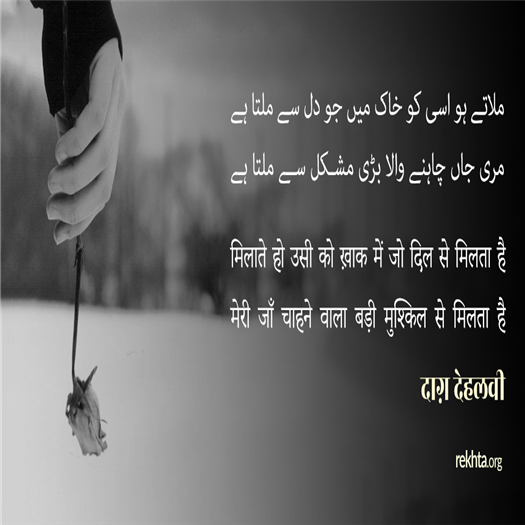
milāte ho usī ko ḳhaak meñ jo dil se miltā hai
mirī jaañ chāhne vaalā baḌī mushkil se miltā hai
those who meet you lovingly then into dust you grind
those who bear affection, dear, are very hard to find
Interpretation:
Rekhta AI
The speaker complains about cruel ingratitude: the sincere friend/lover who comes from the heart is the one being humiliated and destroyed. “Dust” suggests disgrace, ruin, or being cast down. The second line stresses how rare such genuine love is, so harming it is an even greater folly. The emotional core is grief mixed with protest at not valuing devotion.
milate ho usi ko KHak mein jo dil se milta hai
meri jaan chahne wala baDi mushkil se milta hai
those who meet you lovingly then into dust you grind
those who bear affection, dear, are very hard to find
Interpretation:
Rekhta AI
The speaker complains about cruel ingratitude: the sincere friend/lover who comes from the heart is the one being humiliated and destroyed. “Dust” suggests disgrace, ruin, or being cast down. The second line stresses how rare such genuine love is, so harming it is an even greater folly. The emotional core is grief mixed with protest at not valuing devotion.
nahīñ khel ai 'dāġh' yāroñ se kah do
ki aatī hai urdu zabāñ aate aate
Interpretation:
Rekhta AI
Dagh Dehlvi stresses that writing or speaking refined Urdu is a serious art, not something to be taken lightly. The phrase “aati hai… aate aate” suggests slow, hard-won attainment through practice and lived experience. Beneath the boast is a warning and a humble truth: real eloquence takes patience, discipline, and maturity.
nahin khel ai 'dagh' yaron se kah do
ki aati hai urdu zaban aate aate
Interpretation:
Rekhta AI
Dagh Dehlvi stresses that writing or speaking refined Urdu is a serious art, not something to be taken lightly. The phrase “aati hai… aate aate” suggests slow, hard-won attainment through practice and lived experience. Beneath the boast is a warning and a humble truth: real eloquence takes patience, discipline, and maturity.
Qita 2
Rubai 6
Qisse 5
Naat 1
BOOKS 77

Videos 81
Audios 45
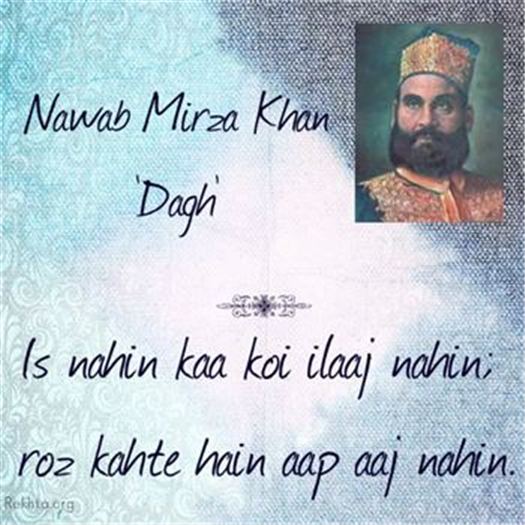
aap kaa e'tibaar kaun kare
Aapka aitbar kaun kare
baaqii jahaa.n me.n qais na farhaad rah gayaa
RELATED Poets
-
 Mahmood Rampuri
Disciple
Mahmood Rampuri
Disciple
-
 Bekhud Badayuni
Disciple
Bekhud Badayuni
Disciple
-
 Bekhud Dehlvi
Disciple
Bekhud Dehlvi
Disciple
-
Hasan Barelvi
Disciple
-
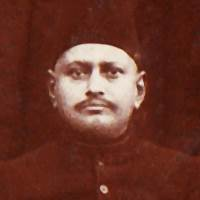 Seemab Akbarabadi
Disciple
Seemab Akbarabadi
Disciple
More Poets From "Delhi"
-
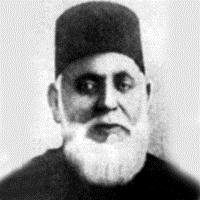 Riyaz Khairabadi
-
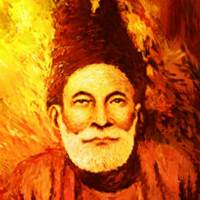 Mirza Ghalib
-
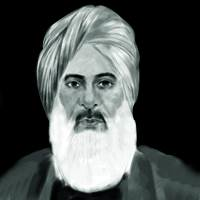 Ameer Minai
-
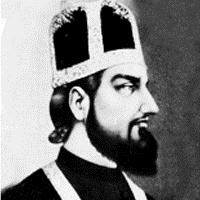 Shaikh Ibrahim Zauq
-
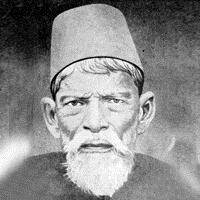 Akbar Allahabadi
-
 Raees Rampuri
-
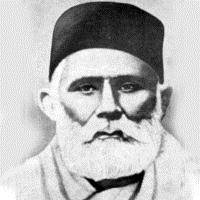 Altaf Hussain Hali
-
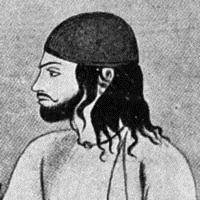 Momin Khan Momin
-
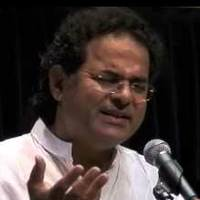 Farhat Shahzad
-
 Nizam Rampuri
-
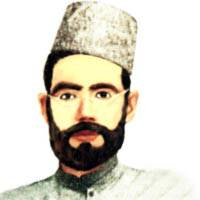 Muztar Khairabadi
-
Lala Madhav Ram Jauhar
-
Asad Ali Khan Qalaq
-
 Asad Badayuni
-
 Naresh Shandilya
-
Shefta Mustafa Khan
-
 Nasreen Naqqash
-
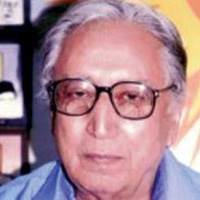 Shahzad Ahmad
-
 Mustafa Zaidi
-
 Ahmad Faraz